.svg)

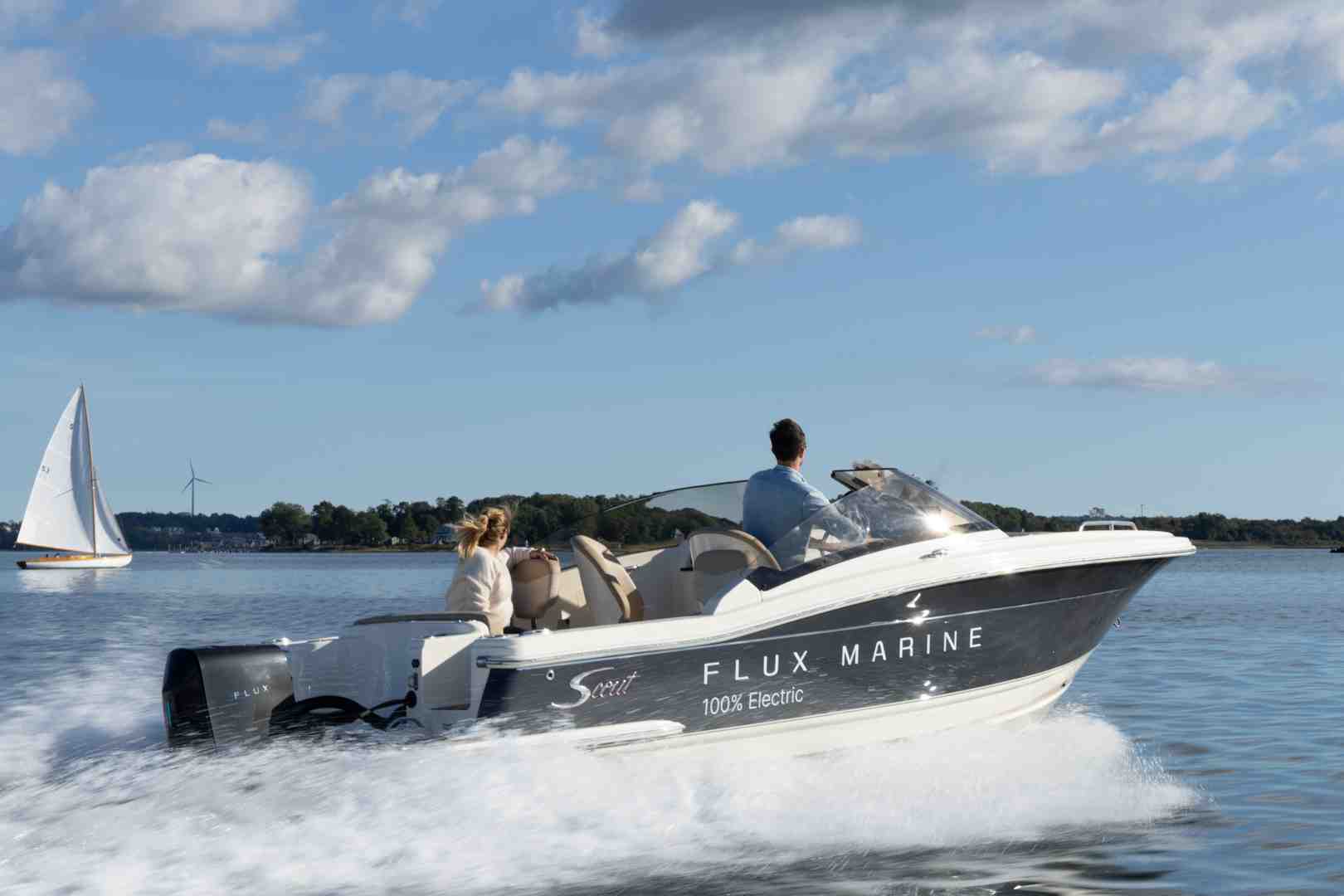
Why Green Boat Technology Is Changing the Marine Industry
Green boat technology is changing how we power boats, driven by the marine industry's significant environmental impact and the need for cleaner alternatives. Here's what you need to know:
Key Green Boat Technologies:
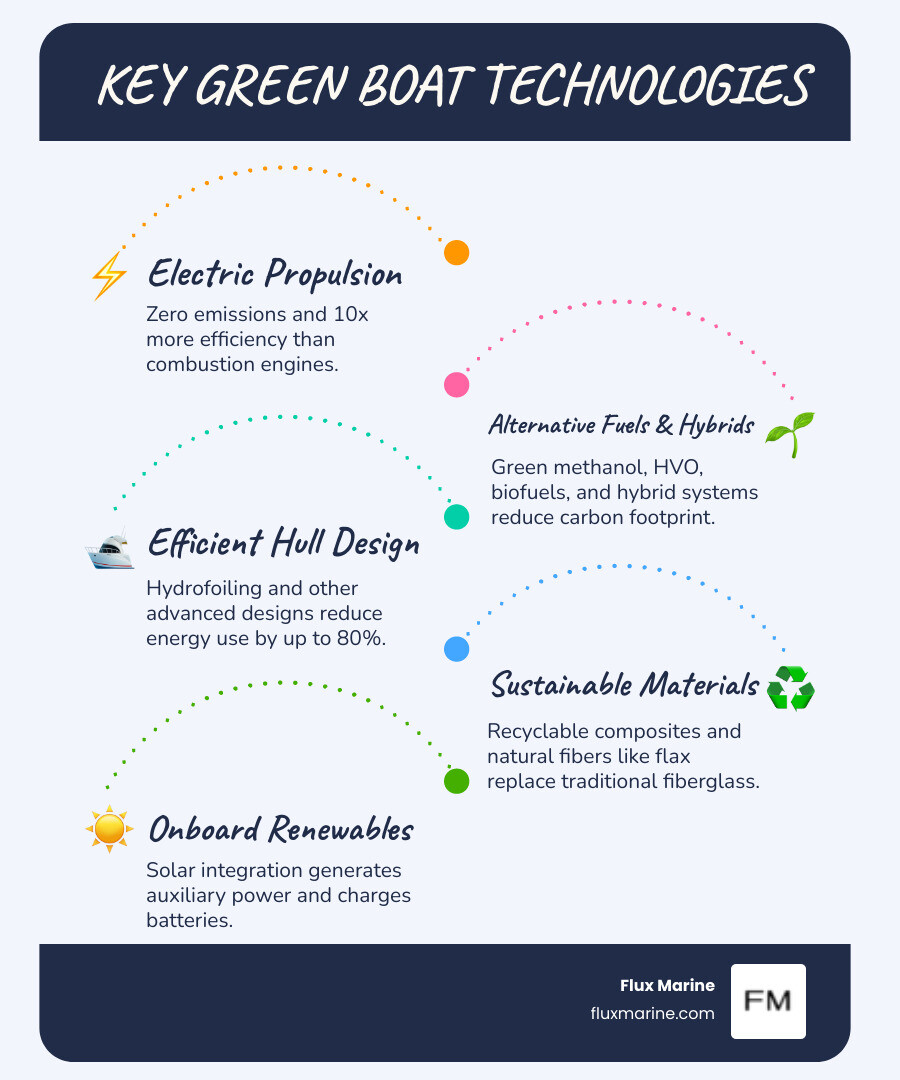
- Electric Propulsion - Battery-powered outboards delivering zero emissions and 10x more efficiency than combustion engines
- Alternative Fuels - Green methanol, HVO, and biofuels reducing carbon footprint by up to 50%
- Hybrid Systems - Combined diesel-electric propulsion for extended range with lower emissions
- Hydrofoiling - Advanced hull designs reducing energy use by up to 80%
- Solar Integration - Onboard renewable energy generation for auxiliary power and battery charging
- Sustainable Materials - Recyclable composites and natural fibers like flax replacing traditional fiberglass
Why It Matters:
Maritime shipping accounts for nearly 3% of global CO2 emissions—comparable to entire nations like Germany—and emissions jumped 5% in 2021 alone. The boating industry is shifting from noisy, polluting fossil fuel engines to cleaner alternatives that deliver better performance, lower operating costs, and minimal environmental impact.
The transition is practical, not theoretical. Electric outboards now deliver comparable power to gas engines for recreational and commercial use. Alternative fuels work in existing engines with minimal modifications. Smarter hull designs slash energy consumption without sacrificing performance.
I'm Benjamin Sorkin, founder and CEO of Flux Marine, where we engineer high-performance electric outboard motors that match gas engine capability without the fuel, fumes, or maintenance. My work in Green boat technology spans from early research at Princeton through powertrain development for marine applications, focusing on making electric propulsion a practical reality for serious boaters.
Why Green Boat Technology Matters for Today’s Boaters
For years, the environmental impact of marine travel often went overlooked, overshadowed by other industries. However, the reality is stark: maritime emissions rank sixth among the planet’s largest polluters. Oceangoing vessels alone account for almost 3% of global CO2 emissions, a figure that continues to grow, having jumped nearly 5% in the year prior to June 2022. This makes the shipping industry's carbon footprint comparable to that of entire countries.
This isn't just about large cargo ships; it's about the collective impact of all vessels on our waterways. Traditional combustion engines contribute to air and water pollution, release greenhouse gases, and create noise that disrupts marine ecosystems. The good news is that the industry, from manufacturers to individual boat owners in places like Rhode Island and Florida, is increasingly recognizing the need for change and embracing green boat technology.

Key Environmental Benefits
Adopting green technologies offers a cascade of benefits that extend beyond simply reducing emissions.
- Lower CO2 Emissions: Technologies like electric propulsion produce zero tailpipe emissions, while alternative fuels significantly reduce carbon output. For instance, hydrogen fuel cells produce only water as waste, offering a truly clean energy source. Even a hydrogen-powered tug is projected to produce 30% less CO2 emissions than a comparable diesel tug.
- No Oil or Fuel Spills: Electric systems eliminate the risk of accidental fuel or oil leaks, protecting delicate marine environments in places like the Chesapeake Bay or New York's coastal waters.
- Quieter Operation for Marine Life: Electric boats operate with significantly less noise, reducing disturbance to marine animals and enhancing the peaceful experience for boaters. This is a core part of our mission at Flux Marine – contributing to a cleaner, quieter industry.
- Reduced Lifecycle Carbon Footprint: From sustainable material choices to efficient operation, green boat technologies aim to minimize environmental impact from a vessel's construction to its end-of-life.
- Improved Local Air Quality: By eliminating exhaust fumes, green boats contribute to healthier air in marinas and coastal communities, a benefit keenly felt in busy areas like West Palm Beach, Florida, or the harbors of Rhode Island.
The Growth of Marine Emissions
The global shipping industry is a vital artery of commerce, but its expansion comes with a significant environmental cost. Container ships, which transport nearly everything we consume, are growing larger and more numerous. This relentless growth has led to a steady increase in the shipping industry's CO2 emissions, which, as noted, jumped nearly 5% in 2021.
This trend underscores the urgent need for practical, scalable solutions. While the International Maritime Organization (IMO) has a current climate strategy that only mandates cutting emissions in half by 2050, environmental advocates are pushing for a more ambitious goal of entirely zeroing out emissions by mid-century. This push for stricter regulation, combined with growing consumer demand for sustainable options, is accelerating the development and adoption of green boat technology. The challenges are substantial, but the imperative to protect our oceans and skies is clear.
The Core of Green Boat Technology: Electric Propulsion and Beyond
The shift away from traditional combustion engines is at the heart of green boat technology. This section explores the main alternatives, focusing on electric propulsion and other emerging solutions that are reducing marine emissions and redefining what's possible on the water.
Electric Propulsion: Efficiency and Real-World Performance
Electric propulsion systems are rapidly becoming a cornerstone of sustainable boating. The efficiency gains are remarkable: electric boat engines are an impressive 10 times more efficient than their combustion counterparts. While petroleum engines typically convert only about 20% of their energy into useful motion, losing 80% as heat, electric engines boast an efficiency of around 80%, with only 20% lost as heat. This translates directly into lower operating costs and a significantly reduced environmental footprint.
At Flux Marine, we see this efficiency as a fundamental advantage, allowing us to deliver a more powerful, efficient, and enjoyable boating experience. Our electric outboards provide instant torque, offering responsive acceleration and precise control, which is a major advantage for everything from recreational cruising to demanding workboat applications. We've seen this with electric workboats drawing attention for their quiet operation and sustained performance.
The evolution of marine batteries is also critical to this progress. Advances from traditional lead-acid to more energy-dense and efficient solid-state options are continuously expanding the capabilities of electric boats. While some express concerns about battery production's carbon intensity or energy density limitations, for many applications, the switch to electric becomes economically worthwhile within the first year due to fuel savings and reduced maintenance. Our goal is to make electric boating not just environmentally friendly, but also safe and practical for everyday use, addressing concerns and providing reliable performance.
Alternative Fuels and Hybrid Systems: Transitioning to Cleaner Boating
While electric propulsion is ideal for many applications, especially in the recreational and smaller commercial sectors, other solutions are vital for larger vessels and longer ranges. Alternative fuels and hybrid systems offer practical pathways to reduce carbon footprints across the broader maritime sector.
Alternative Fuels:Green methanol and other biofuels are emerging as promising alternatives. Green methanol, produced from sustainable sources like biomass waste or captured CO2 combined with renewable hydrogen (e-methanol), can significantly reduce a ship's carbon footprint compared to fossil fuels. Large shipping companies are already investing heavily in methanol-powered ships, with new e-methanol plants under construction to meet demand. These fuels can often be used in modified existing engines, making the transition more feasible.
Hydrogen fuel cells represent another exciting frontier. They produce only water as waste, are more efficient than electrical batteries, and boast a higher energy density, making them suitable for powering larger vessels or providing extended range. We are seeing advancements in hydrogen technology, including systems that can generate hydrogen on demand using methanol reformer technology, simplifying storage challenges.
Hybrid Propulsion Systems:Hybrid systems combine traditional diesel engines with electric motors and battery banks. This allows vessels to operate in electric-only mode for quiet, zero-emission cruising in sensitive areas or at low speeds, switching to diesel for longer distances or higher power demands. Such systems can also integrate hydrogeneration, where the propeller generates electricity while sailing, further reducing reliance on fossil fuels. This blend of power sources offers flexibility, extended range, and a significant reduction in overall emissions.
Here's a comparison of these key green propulsion types:
FeatureElectric BatteriesHybrid SystemsBiofuels (e.g., Green Methanol)Energy DensityModerate (improving with new tech)High (combines fuel with battery)HighRefueling TimeLonger (charging time varies)Quick (fueling, with some charging)Quick (similar to fossil fuels)InfrastructureDeveloping (charging stations, shore power)Existing (fueling), developing (charging)Developing (green fuel production, bunkering)Primary Use CaseShort to medium range, recreational, workboatsExtended range, larger recreational, smaller commercialLong-range commercial shipping, larger vessels
Beyond the Motor: Designing for Sustainable Boating
True sustainability in boating extends far beyond just the propulsion system. It encompasses every aspect of a vessel, from its fundamental design to the materials used and how it operates on a daily basis. This holistic approach to green boat technology ensures that we're not just swapping out engines, but fundamentally rethinking how boats interact with their environment.
Efficient Hull Design: Reducing Energy Demand
The shape of a boat's hull is one of the biggest drivers of marine energy use. A well-designed hull can dramatically reduce drag, leading to significant energy savings, regardless of the propulsion method. It's about making the boat glide through the water, rather than pushing against it.
Innovations in hull design are changing efficiency. Hydrofoiling technology, for instance, lifts the boat entirely out of the water, dramatically reducing hydrodynamic drag. This "flying" above the waves can result in an 80% reduction in energy use compared to traditional boats. This is a game-changer for speed and efficiency, making what was once confined to racing now accessible for everyday use. Other advancements include rethinking planing hulls, with some designs even redirecting spray aft to add thrust rather than wasting energy. Prioritizing hull shape early in the design process is crucial, as its impact on energy consumption is profound and difficult to alter later.
Sustainable Materials and End-of-Life Planning
Traditional boat building often relies on materials like fiberglass and thermoset resins, which are durable but notoriously difficult to recycle. A key aspect of green boat technology is finding more sustainable alternatives and planning for a boat's entire lifecycle, including its end-of-life.
Advanced composites are now emerging as viable options. Materials like flax, basalt, thermoplastic matrices, recycled PET cores, and bio-resins are being developed and integrated into boat construction. These materials offer comparable strength and durability while having a significantly lower environmental impact. For instance, some manufacturers are using certified low-emission resins and foam cores made partially from recycled PET plastics, and even repurposing production waste like foam for home insulation and wood scraps for heating pellets.
The concept of "design for disassembly" is gaining traction, ensuring that boats can be more easily broken down and their components recycled or repurposed when their service life eventually ends. Lifecycle Assessment (LCA) tools are becoming essential for evaluating the true environmental cost of materials and manufacturing processes, moving beyond superficial "green" labels to focus on actual impact.
Onboard Renewable Energy and Smart Optimization
Maximizing efficiency also involves generating and managing energy onboard. Integrating renewable energy sources directly onto boats reduces reliance on shore power or onboard generators, especially for non-propulsion loads.
- Solar Integration: Solar panels are increasingly common, providing clean energy to charge battery banks and power auxiliary systems like lights, refrigeration, and electronics. Recessed solar systems with forced air cooling are being integrated into yacht designs, generating significant daily charge.
- Wind Power: While challenging for smaller vessels, larger boats can harness wind power. Some innovative concepts even involve autonomous energy-harvesting vessels that essentially act as mobile offshore wind turbines, generating clean fuel at sea.
- Hydrogeneration: For sailboats, hydrogeneration is a powerful tool. By allowing the propeller to freewheel while sailing, it generates electricity that can be stored in batteries. This technology can enable a yacht to cross an ocean without consuming fossil fuels, truly embodying a sustainable journey.
Beyond generation, smart energy management is critical. AI-driven optimization systems are being deployed to monitor real-time sensor data, predict demand, and reduce unnecessary energy loads. Commercial vessels have already achieved 10 to 15% reductions in non-propulsion energy use (for HVAC, lighting, and refrigeration) through these intelligent systems. This means the cleanest kilowatt is often the one you never have to use.
Overcoming Problems: Practical Challenges and Economic Realities
The adoption of any new technology, especially one as transformative as green boat technology, comes with its share of problems. While the benefits are clear, we must address the practical challenges and economic realities that boaters and the industry face.
Key Challenges for Green Boat Technology Adoption
- Upfront Cost: Green boat technologies, particularly electric propulsion systems and advanced materials, can have a higher initial purchase price compared to their traditional fossil fuel counterparts. This investment is often offset by long-term savings, but the initial barrier remains for some.
- Infrastructure for Recharging/Refueling: While charging infrastructure is growing rapidly, particularly in coastal areas like Rhode Island, Florida, and New York, widespread availability for electric boats is still developing. Similarly, the infrastructure for alternative fuels like green methanol or hydrogen is nascent and requires significant investment to scale. However, innovative solutions, such as modular dockside stations that can store multiple fuel types, are emerging to address this.
- Battery Production Impact and Energy Density Limitations: The production of batteries, particularly lithium-ion, is carbon-intensive. While the overall lifecycle impact is often lower than fossil fuels, it's a factor to consider. Moreover, batteries still have lower energy density compared to liquid fuels, meaning they take up more space and add more weight for a given amount of energy. For some larger or longer-range applications, this can be a constraint, though advancements like solid-state batteries are continually improving this.
- Range Anxiety: Similar to electric vehicles, some boaters express concern about the range of electric boats. However, for most recreational and workboat applications within our operating areas (e.g., day trips in New Jersey or commercial operations in Virginia), modern electric outboards offer ample range. We address this by providing transparent performance data and supporting real-world experiences, like extended journeys, to demonstrate capability.
Economic Considerations for Boaters and the Industry
Despite the challenges, the economic case for green boat technology is compelling and continues to strengthen.
- Operating Cost Savings for Owners: Electric boat engines are significantly more efficient than combustion engines, leading to drastically reduced "fuel" costs. For many boaters, switching to electric can become economically worthwhile within the first year. The absence of oil changes, spark plugs, and other routine engine maintenance further slashes annual operating expenses.
- Total Cost of Ownership (TCO): When considering the TCO, which includes purchase price, fuel, maintenance, and potential resale value, green boats often prove to be a smarter long-term investment. The durability and simpler design of electric motors typically result in a longer lifespan and fewer costly repairs.
- ROI on Green Investments: For commercial operators, the return on investment (ROI) for green technologies is increasingly clear. Reduced fuel bills, lower maintenance, and the ability to operate in emission-restricted zones (which are becoming more common) contribute to a healthier bottom line. For manufacturers, investing in green technology positions them at the forefront of an evolving market, appealing to a growing segment of environmentally conscious buyers.
What’s Next: The Future of Green Boat Technology
The pace of innovation in green boat technology is accelerating, promising an exciting future for marine travel. We are witnessing breakthroughs that will shape the next decade, making boating cleaner, more efficient, and more accessible.
Breakthroughs on the Horizon
- Solid-State Batteries: The next generation of battery technology, solid-state batteries, promises higher energy density, faster charging times, and improved safety. This will further extend the range and utility of electric boats, making them viable for an even wider array of applications. We are closely tracking the evolution of marine batteries, from lead-acid to solid-state, to ensure our systems remain at the cutting edge.
- Scalable Energy-Efficient Hulls: Expect to see more widespread adoption of advanced hull designs, including hydrofoiling technology that significantly reduces drag and energy consumption. What is now considered cutting-edge will become more mainstream, improving efficiency across all vessel types.
- Mainstream Adoption of Alternative Fuels: Green methanol, hydrogen, and ammonia are moving beyond pilot projects to become scalable solutions for larger vessels. The development of infrastructure for these fuels, including large-scale production plants and bunkering facilities, will solidify their role in decarbonizing maritime travel.
- Autonomous Energy-Harvesting Vessels: Concepts for vessels that can autonomously generate their own energy at sea, for instance, by using wind power to produce hydrogen, are under development. While these are complex, they represent a long-term vision for self-sustaining maritime operations.
- Advanced Recyclable Composites: Research and development in materials science will yield even more sustainable and recyclable composites, further reducing the environmental footprint of boat manufacturing and addressing end-of-life challenges more effectively.
What to Expect in the Next 5–10 Years
The coming decade will be transformative for the marine industry, particularly in our operational regions of the Northeast and Southeast United States.
- Increased Regulation: Expect stricter emissions standards and greater regulatory pressure from bodies like the IMO and national governments. This will drive broader adoption of green technologies and accelerate the phase-out of older, more polluting vessels.
- Maturing Supply Chains for Alternative Fuels: As demand grows, the supply chains for green methanol, hydrogen, and other alternative fuels will become more robust and cost-effective, making these options more accessible for commercial and larger recreational vessels.
- Greater Integration of Smart Systems: Connected technology will become standard, with AI-driven systems continuously optimizing everything from propulsion efficiency to onboard energy management. This will lead to even greater energy savings and a more seamless boating experience.
- More Affordable Electric Options: As technology matures and production scales, the upfront cost of electric boats and propulsion systems will become more competitive, making them an increasingly attractive choice for a broader market, from weekend anglers to workboat operators.
Conclusion: Charting a Practical Path to Cleaner Boating
Green boat technology is advancing quickly, offering real alternatives to gas engines. From efficient electric propulsion to sustainable materials and smarter design, the industry is moving toward cleaner, more reliable boating. For those seeking a powerful, dependable, and low-emission solution, electric outboards are now a practical choice. Flux Marine is leading this transition, engineering electric propulsion systems that deliver real-world performance and reliability.
We are committed to making electric boating a superior experience, focusing on innovation that truly matters to boaters. Our technology provides the power and efficiency you need, without the noise, fumes, or maintenance hassle of traditional combustion engines. Join us in navigating toward a greener, quieter, and more enjoyable future on the water.
Learn more about high-performance electric propulsion technology

.jpg)