.svg)

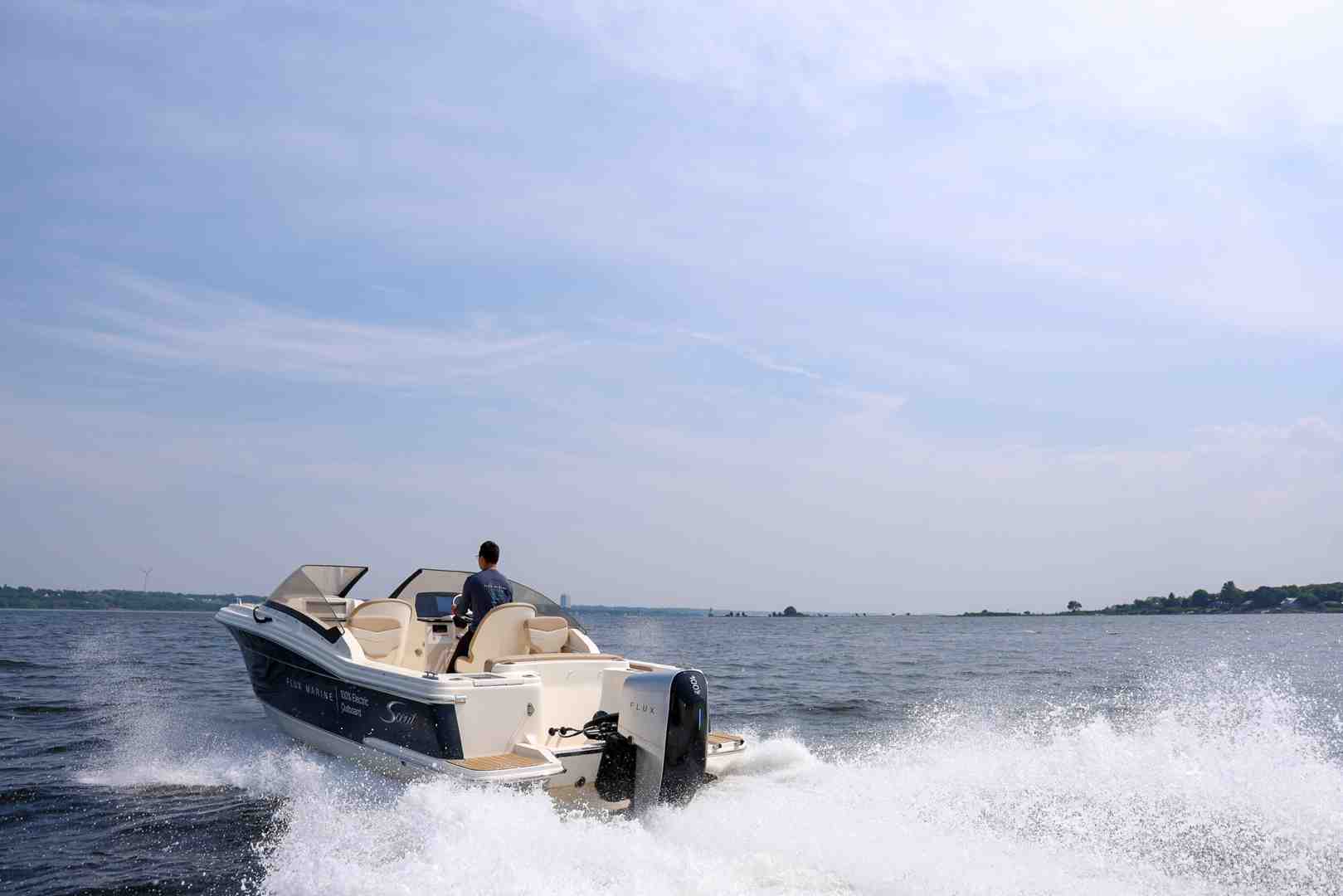
Why Electric Marine Outboards Are Changing How We Power Boats
An electric marine outboard is a propulsion system that replaces traditional gasoline engines with electric motors powered by rechargeable batteries. Here's what you need to know:
Key Features:
- Zero emissions – No exhaust fumes or fuel smell
- Quiet operation – Silent in neutral, whisper-quiet underway
- Instant torque – Immediate power response for superior control
- Lower maintenance – No oil changes, spark plugs, or winterization
- Reduced operating costs – Electricity costs less than gasoline per hour
Power Range:
- Small motors: 500W–3kW (equivalent to 2–6 HP gas engines)
- Mid-range: 6kW–20kW (equivalent to 9.9–30 HP)
- High-output: 40kW+ (50+ HP equivalent)
Typical Applications:
- Tenders and dinghies
- Sailboat auxiliary power
- Fishing boats and pontoons
- Commercial workboats
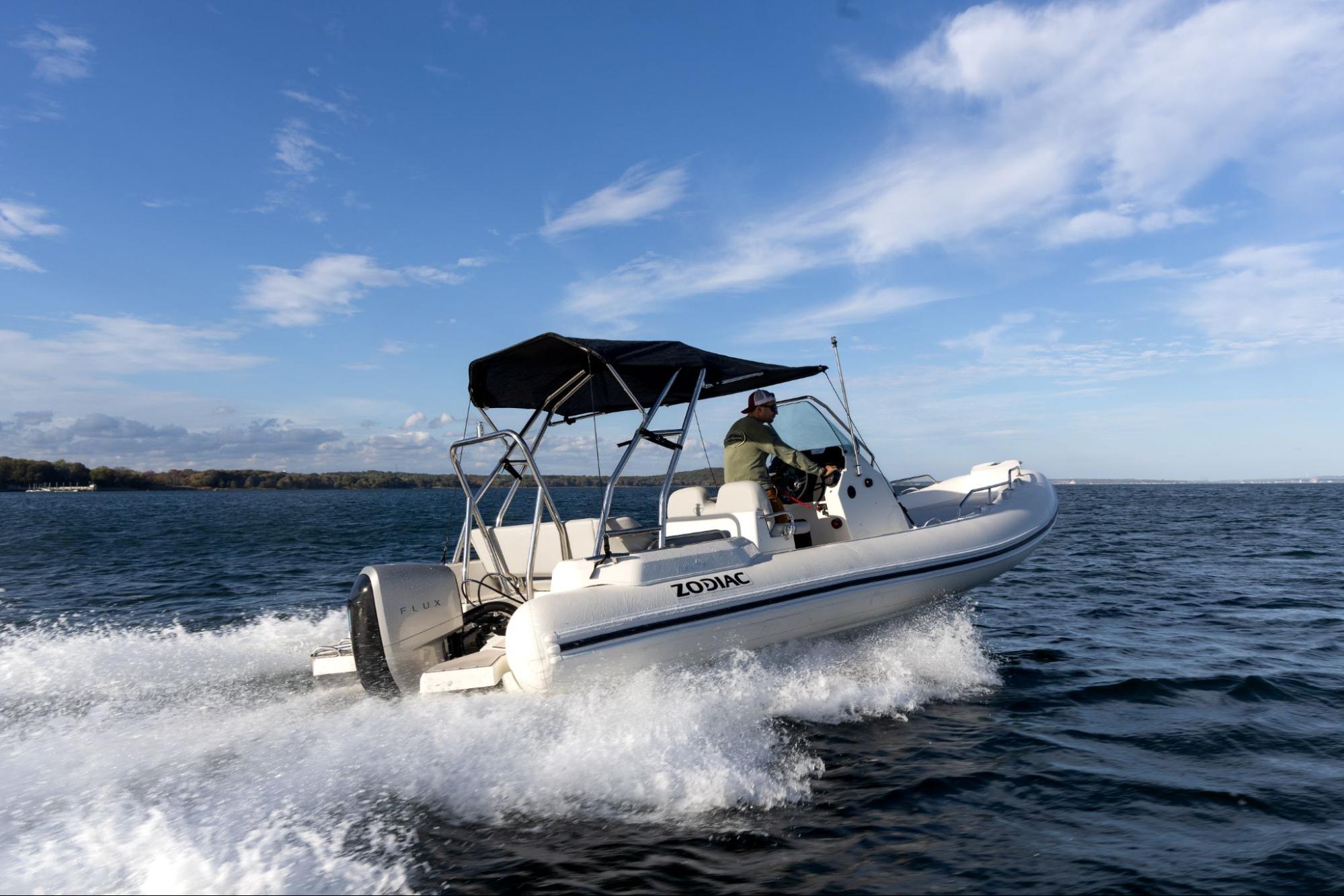
Electric propulsion has moved beyond low-power trolling motors. Modern electric outboards now deliver performance comparable to traditional gas engines across recreational and commercial applications, with significantly lower noise, vibration, and long-term costs.
The development of lightweight lithium batteries was a pivotal moment. Where older electric systems relied on heavy lead-acid batteries that limited practical use, today's lithium-ion packs provide enough energy density to power serious boating—from extended cruising range to planing speeds on larger vessels.
I'm Benjamin Sorkin, founder and CEO of Flux Marine, where I lead the development of high-performance electric outboard motors designed for real-world marine applications. My background in mechanical and aerospace engineering, combined with hands-on experience in electric vehicle and naval powertrain development, informs our approach to building electric marine outboards that deliver the power and reliability professional and recreational boaters demand.
This guide breaks down how electric outboards work, what specifications matter for your specific vessel, and how to evaluate whether electric propulsion is the right choice for your boating needs.
The Practical Advantages of Electric Propulsion Over Gas
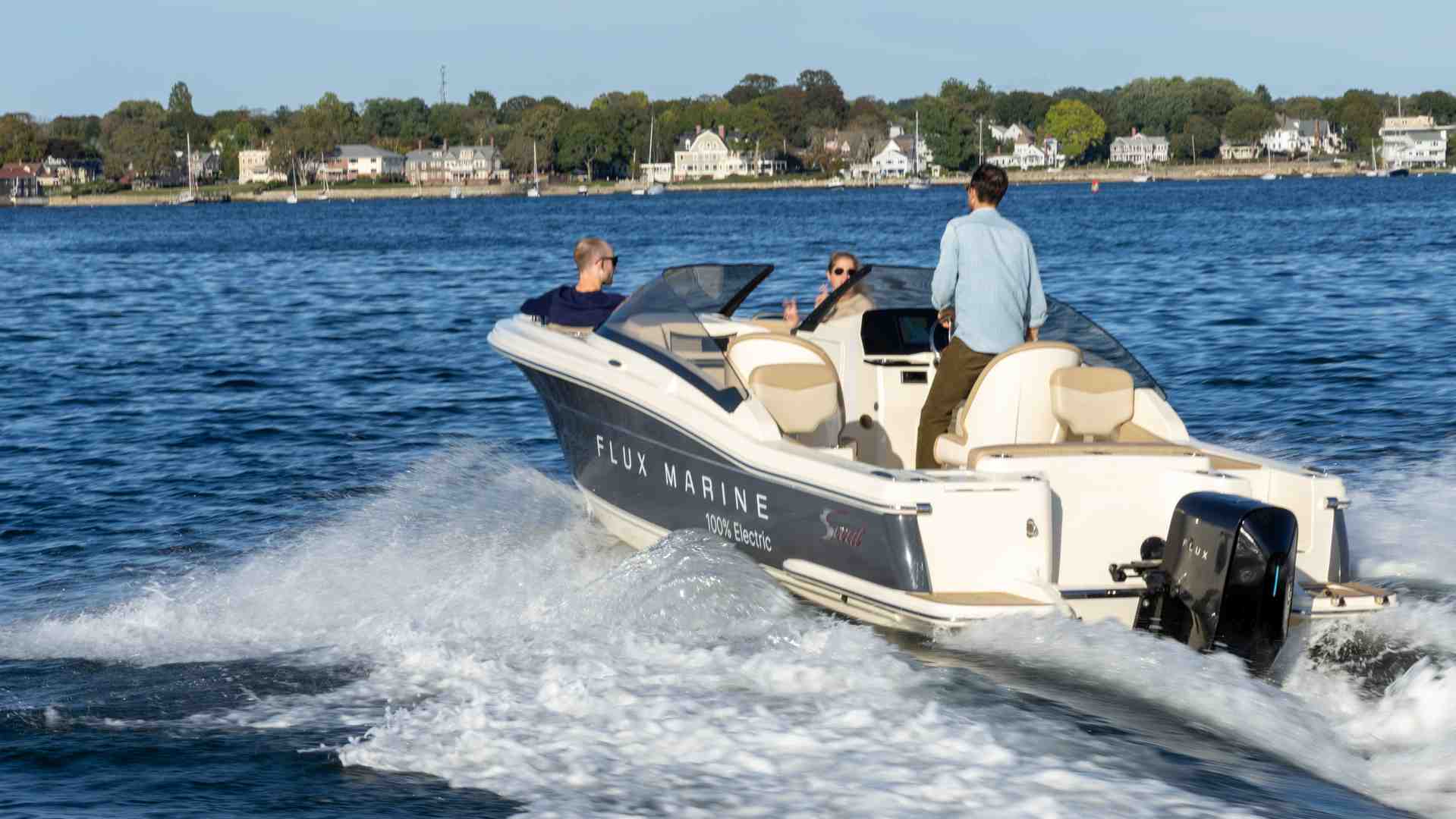
For decades, gasoline outboards have been the default choice for marine propulsion. However, a new generation of powerful electric outboards is rapidly changing this landscape. The shift to electric isn't just about environmental responsibility; it's about a superior boating experience and practical benefits that directly impact boat owners in places like Bristol, RI, West Palm Beach, FL, and the waters of New York and New Jersey.
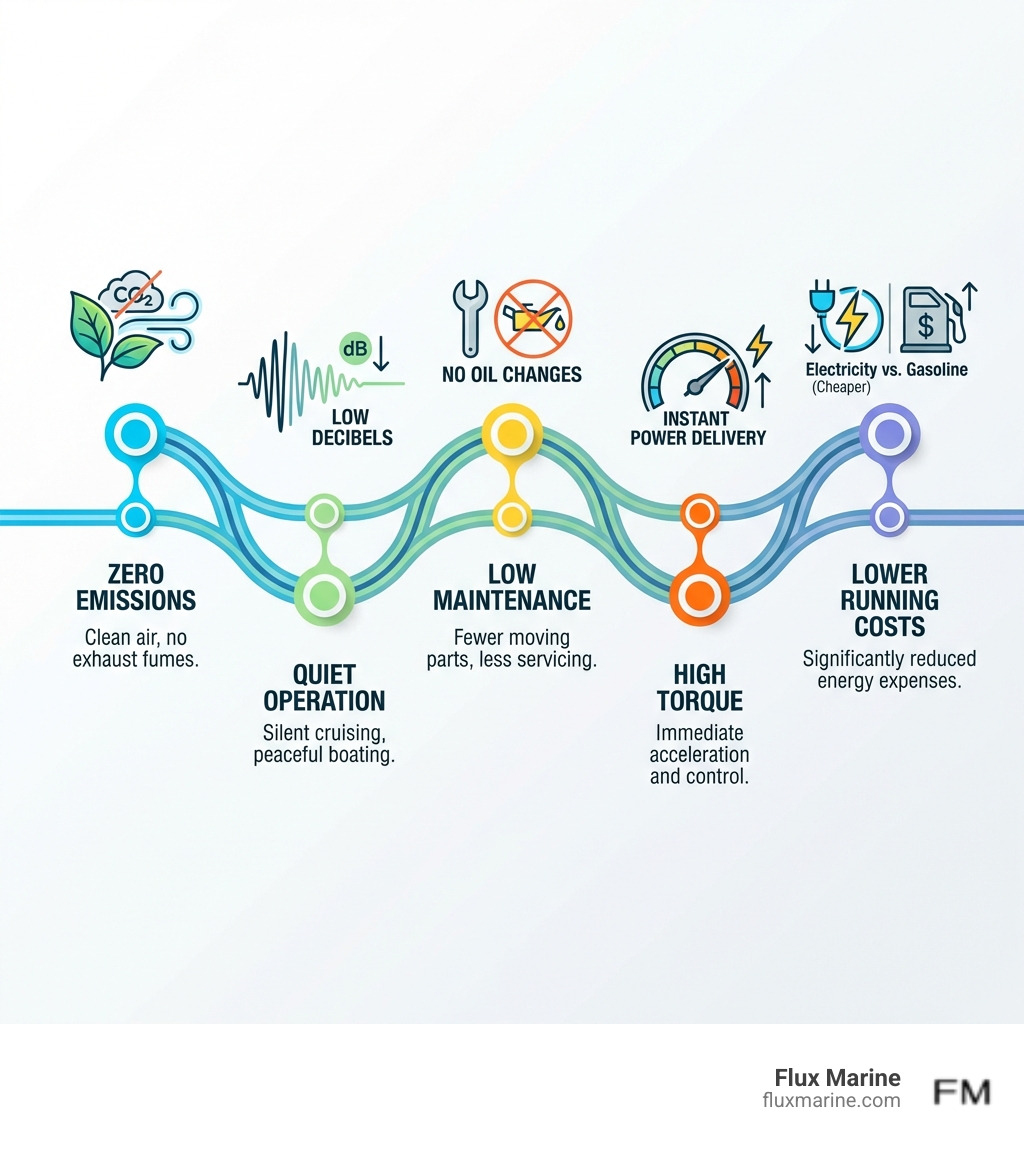
Here are the main advantages we see with electric marine outboards compared to traditional gasoline engines:
- Quiet Operation: Perhaps the most immediately noticeable benefit is the silence. Electric outboards are virtually silent in neutral and whisper-quiet at slow speeds, typically less than half as loud as combustion engines. This allows for easier conversation underway and improves communication while docking, changing the boating experience from noisy to serene.
- No Exhaust Fumes or Smell: We eliminate exhaust fumes, as well as the smell, mess, and safety concerns that come with having gasoline aboard. This means a cleaner deck, cleaner air, and a more pleasant environment for everyone on board and around the marina.
- Simplified Maintenance: Gas engines require routine oil changes, spark plug replacements, fuel filter checks, and winterization procedures. Electric outboards drastically reduce these needs. With fewer moving parts and no combustion process, maintenance is minimal, saving you time and money.
- Instantaneous Torque for Superior Maneuverability: Electric motors deliver instant torque from zero RPM. This translates to immediate power response, which is invaluable for precise maneuvering in tight spaces, docking, or navigating currents. Understanding this immediate power delivery is key to appreciating the control an electric system offers. Learn more about Understanding Torque.
- Long-Term Operating Cost Savings: While the initial investment in an electric system can be higher, the long-term savings are significant. Electricity is generally much cheaper than gasoline, and the reduced maintenance requirements further cut down on operational expenses over the lifespan of the motor.
- Reduced Vibration: Electric motors operate with far less vibration than internal combustion engines. This contributes to a smoother, more comfortable ride, especially at lower speeds.
- Improved Reliability with Fewer Moving Parts: The simplicity of electric motors, with fewer components subject to wear and tear, often leads to greater reliability and a longer operational lifespan.
These advantages highlight why electric propulsion is becoming a compelling choice for serious boaters.
Understanding the Core Components of an Electric Outboard System
To truly appreciate the capabilities of a modern electric marine outboard, it helps to understand its fundamental components. We design our systems for high performance and reliability, and that starts with the core technology.
The Motor: Power, Efficiency, and Design
The motor is the heart of the electric outboard. Unlike gas engines that burn fuel, electric motors convert electrical energy into mechanical motion.
- Brushless PMAC Motors: Many high-performance electric outboards, including ours, use Brushless Permanent Magnet AC (PMAC) motors. These motors are highly efficient, durable, and deliver excellent torque across the RPM range. Some designs even mount these motors above the waterline to decrease underwater drag and avoid potential seal leak repairs, a common issue with submerged lower unit components.
- Power Ratings in Kilowatts (kW): Electric motor power is typically measured in kilowatts (kW). This is a direct measure of the motor's output.
- Comparing kW to Horsepower (HP): While kW is the standard for electric, it's often helpful to compare it to the more familiar horsepower (HP) ratings of gasoline engines. For instance, a 1kW electric motor might be considered equivalent to a 3HP gas outboard in terms of thrust. High-performance electric motors can replace 20 HP combustion engines, yet weigh about the same as a much smaller 9.9 HP gas outboard.
- Thrust and Propeller Efficiency: The actual propulsive force a motor generates is called thrust. Electric outboards often feature optimized propeller designs for either more thrust (for heavy loads or slow speeds) or greater speed (for lighter, faster boats). The quiet, lightweight power is often achieved through optimized helical gears.
- Shaft Length Options (Short vs. Long): Just like gas outboards, electric models come with various shaft lengths to match different transom heights. This is crucial for optimal propeller depth and performance.
- Above-Water Motor Mounting vs. Submerged Designs: Some innovative designs integrate the motor into the shaft or above the water line, reducing drag and simplifying maintenance. Other designs keep the motor in a traditional lower unit.
The Battery Pack: Your Fuel Tank
The battery pack is the "fuel tank" of an electric outboard system. Its capacity and chemistry are critical to performance and range.
- Integrated vs. Separate Battery Systems: You'll find two main approaches to battery integration. Some models have the battery integrated directly into the motor unit or shaft, offering a sleek, all-in-one design. Other systems feature removable batteries that can be charged off-board and swapped for extended range. For larger systems, batteries are typically separate, allowing for greater customization and capacity.
- Lithium-ion Battery Chemistry: The development of lightweight lithium-ion batteries has been a game-changer. Specifically, Lithium Iron Phosphate (LiFePO4) batteries are common in marine applications due to their safety, longevity, and energy density. These advanced batteries pack more power per pound and are significantly lighter and smaller than older lead-acid batteries.
- Understanding Battery Capacity (kWh): Battery capacity is measured in kilowatt-hours (kWh) and indicates how much energy the battery can store. This directly correlates to the motor's run time and the boat's range. For example, a small portable electric outboard might have a 1kWh battery, while slightly larger models can feature capacities over 1.2kWh.
- System Voltage (24V, 48V, 96V, and Higher): Electric outboard systems operate at various voltages. Smaller motors might use 24V or 48V systems, while more powerful, high-performance units often operate at 96V or higher. Higher voltage systems generally allow for more power output and greater efficiency.
- From Lead-Acid to Solid-State: The Evolution of Marine Batteries: The rapid advancement in battery technology, including the emergence of solid-state batteries, continues to improve power density and reduce weight, making electric propulsion even more viable.
- Onboard and Shore-Side Charging Methods: Charging options are flexible. You can charge batteries directly from shore power (120V or 240V), or via onboard systems using generators, alternators, or even solar panels.
- Solar Charging Integration: For those looking to extend range or maintain a charge while off-grid, solar charging integration is an increasingly popular option.
- Best Practices for Battery Care: To maximize battery life, it's best to top up batteries after each use rather than consistently draining them completely. Using good quality lithium, AGM, or gel batteries is crucial; avoid standard "leisure batteries" as they will fail quickly in this application.
Controls and Connectivity
Modern electric outboards offer sophisticated controls and connectivity options that improve the user experience and provide vital information.
- Tiller vs. Remote Throttle Controls: Depending on the boat and application, you can choose between a traditional tiller handle for direct control or a remote throttle system, often integrated with steering, for larger vessels.
- Digital Displays with Real-Time Data: Many systems feature onboard computer displays that provide essential data like remaining range, battery status (charge level), speed, and power consumption. This gives you precise control and eliminates "range anxiety."
- NMEA 2000 Integration for System-Wide Data Sharing: Advanced electric outboards are often NMEA 2000 compatible. This allows for seamless integration with other marine electronics on your boat, sharing data across displays and systems for a comprehensive overview of your vessel's operation.
- Connected Technology: The ability to connect your electric outboard to an app on your smartphone or tablet is a growing trend. This offers detailed diagnostics, range prediction, and remote monitoring capabilities, putting more control at your fingertips.
How to Choose the Right Electric Marine Outboard for Your Boat
Selecting the ideal electric marine outboard involves more than just picking the most powerful unit. It requires carefully matching the motor's capabilities and battery capacity to your specific vessel and how you intend to use it. Whether you're cruising the Narragansett Bay in Rhode Island or fishing the intercoastal waterways of Florida, the right choice ensures optimal performance and satisfaction.
Matching Power to Application
Different boats and boating activities demand different power levels and range capabilities.
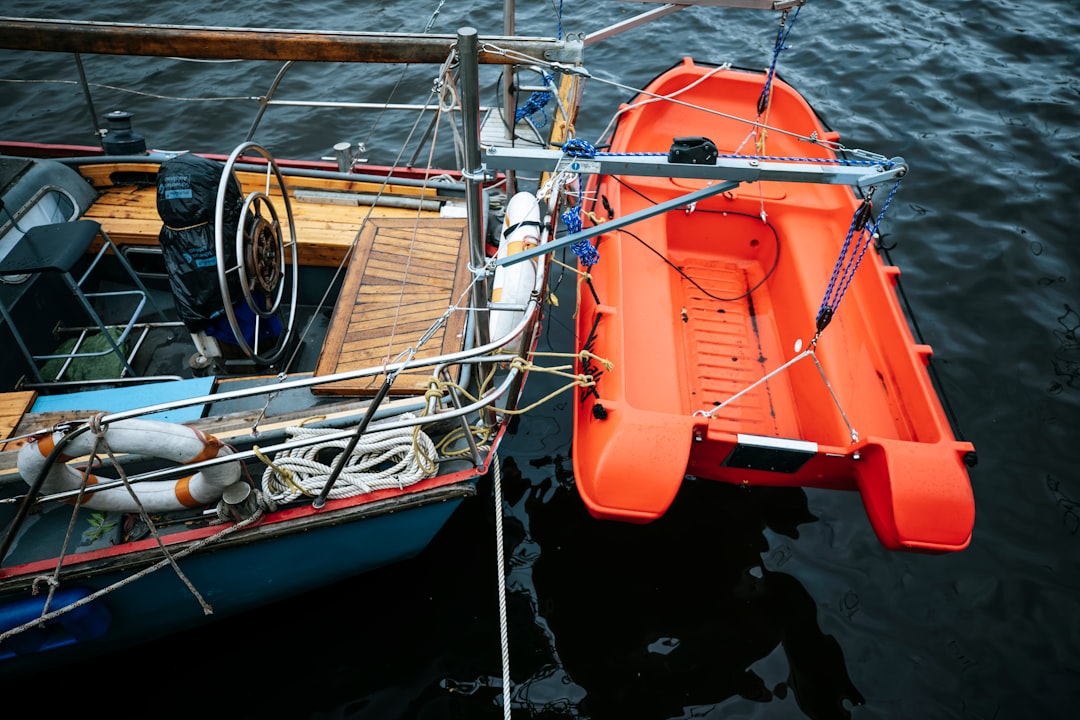
- Tenders and Dinghies: For getting from your main vessel to shore, or for short excursions in calm waters, a smaller, lightweight electric outboard is ideal. A motor in the 5HP-equivalent range is perfect for dinghies up to 8 feet and 350 pounds, offering portability and ease of handling. Modern portable electric systems, including the motor and a 1kWh battery, can weigh under 30kg.
- Auxiliary Power for Sailboats: Many sailboats use outboards for docking, navigating marinas, or as backup propulsion. Electric outboards provide quiet, reliable auxiliary power without the fumes or vibration of a gas engine. A 9.9HP-equivalent motor can power sailboats up to 25 feet and 2,500 pounds, while a 14HP-equivalent provides the extra thrust needed to overcome wind or waves when docking larger sailboats. More powerful systems are available for vessels up to 12 tons.
- Small Fishing Boats and Jon Boats: Anglers benefit greatly from the silent operation of electric outboards, which allows for stealthy approaches to fishing spots. Motors in the 30HP-equivalent range offer extra power for quick bursts of speed favored by lake and reservoir fishermen. For smaller jon boats, 9.9HP or 14HP-equivalent motors can be excellent choices.
- Pontoon Boats: Pontoon boats, known for their leisure cruising, are a natural fit for electric propulsion. The quiet, smooth ride improves the social experience on board. A 50HP-equivalent motor is powerful enough to push large pontoon boats to double-digit speeds, providing ample torque for maneuvering.
- Commercial Workboats: For commercial applications where reliability, efficiency, and reduced emissions are paramount, electric outboards are proving their worth. Systems up to 40-450 kW are available, offering compact, turnkey electric propulsion with a high power-to-weight ratio. These are perfect for diverse commercial needs, from oyster farming in Rhode Island to small ferry services in New York. We are actively involved in powering commercial Workboats.
Key Specifications for Your electric marine outboard
When evaluating an electric marine outboard, pay close attention to these specifications:
ApplicationTypical Power (kW)Battery Capacity (kWh)Typical Weight (kg)Tender0.5 - 1.50.5 - 1.510 - 25Sailboat <25ft3 - 63 - 1025 - 40Pontoon Boat10 - 5010 - 50+40 - 200+Small Workboat10 - 5010 - 50+40 - 200+
- Calculating Power Requirements: This depends on your boat's weight, length, and desired speed. For displacement hulls, reaching "hull speed" requires significantly less power than trying to plane. Our team can help you configure the right motor based on your boat's characteristics and intended use.
- Determining Range Needs: Consider your typical trips. How far do you travel, and at what speed? This will dictate the necessary battery capacity (kWh). For example, some portable electric outboards can achieve over 30nm of range at 25% throttle, which is excellent.
- Total System Weight Considerations: While electric motors themselves can be lighter than gas equivalents, the battery pack adds weight. Consider the "all-up" weight of the motor and battery system, especially for smaller boats or when portability is a factor. Many modern electric systems are now comparable in total weight to 2.5HP petrol engines.
Performance, Range, and the Future of Electric Boating
One of the most common questions we hear about electric outboards revolves around their real-world performance and range. It’s a valid concern, and one that modern technology is addressing head-on.
Real-World Range and Performance of an electric marine outboard
The performance of an electric marine outboard is a dynamic equation influenced by several factors:
- Factors Affecting Range: Your range will vary based on your speed, the hull type of your boat (displacement vs. planing), the load you're carrying, and prevailing sea conditions (currents, wind, chop). Just like a car, faster speeds consume more energy.
- Understanding Hull Speed Limitations: For most displacement hull boats (which push water rather than riding on top of it), there's a theoretical "hull speed" beyond which increasing power yields diminishing returns. Electric outboards are incredibly efficient at these lower, cruising speeds. For example, a 1kW motor can achieve speeds of 4-6 mph on a small skiff, which is sufficient for many applications.
- Real-world comparison tests: Independent tests show that electric outboards are now viable alternatives. For example, a 1kW motor can achieve speeds of 4-6 mph on a small skiff, with a potential range of over 20nm, highlighting the efficiency on different hull types.
- Example Performance Data: A high-performance 50HP-equivalent motor, often using a 96-volt system, can provide ample continuous power to push large pontoon boats to double-digit speeds or even get jon boats to planing speed. This demonstrates that electric power is no longer limited to slow cruising.
- The Journey to Block Island: Real-world voyages, like our own journey to Block Island, prove the capability and reliability of electric propulsion for serious boating adventures.
Innovations Shaping the Future
The electric marine industry is advancing rapidly, driven by continuous innovation. We are at the forefront of these developments, constantly pushing the boundaries of what's possible with electric propulsion.
- High-Power Electric Systems (40kW+): While smaller electric outboards have been around for a while, the significant innovation is the emergence of high-power systems. We now see available power ranges from 40 to 450 kW per single motor, capable of powering vessels up to 12 tons for commercial or leisure applications.
- Advancements in Battery Energy Density: The relentless progress in battery technology, particularly in lithium-ion chemistry and the development of solid-state batteries, means more power can be stored in smaller, lighter packages. This directly translates to longer ranges and more powerful motors without compromising space or weight.
- Smart Electronic Control Units (ECUs) for Performance Optimization: Sophisticated, in-house developed Electronic Control Units (ECUs) manage the system's functions for optimal performance. These smart systems constantly monitor conditions and adjust power delivery for maximum efficiency and range.
- Hydrodynamically Efficient Gearcase and Propeller Designs: Innovation isn't just in the electrical components. Optimized helical gears provide quiet, lightweight power, and advanced propeller designs are crucial for translating motor power into effective thrust, whether for speed or for pulling heavy loads.
Frequently Asked Questions about Electric Outboards
When considering the transition to electric propulsion, boaters often have practical questions about cost, durability, and charging. We're here to provide clear, straightforward answers.
How does the total cost of an electric outboard compare to a gas engine?
- Initial Purchase Price Comparison: It's true that the upfront cost of an electric marine outboard and its associated battery pack can sometimes be higher than a comparable gasoline engine. This is largely due to the advanced battery technology and sophisticated motor controllers.
- Calculating Long-Term Savings from Eliminating Fuel Costs: The real financial advantage of electric propulsion becomes evident over time. Electricity is significantly cheaper per "gallon equivalent" than gasoline. Over years of boating, these fuel savings add up substantially.
- Drastically Reduced Maintenance Expenses: One of the most compelling cost benefits is the near elimination of routine maintenance. Say goodbye to oil changes, spark plug replacements, fuel filter checks, and complex winterization procedures. Electric motors offer greatly reduced noise, vibration, and maintenance. This translates to fewer trips to the service shop and more time on the water in places like the Chesapeake Bay or the Great South Bay.
Are electric outboards safe for saltwater use?
Yes, modern electric marine outboards are designed with saltwater environments in mind, crucial for boaters in coastal areas of Florida, New York, and New Jersey.
- Corrosion-Resistant Materials: Manufacturers use stainless steel clamps and fittings, and other corrosion-resistant materials to withstand the harsh marine environment.
- Use of Sacrificial Anodes: Just like traditional outboards, electric models require sacrificial anodes to protect critical metal components from galvanic corrosion. While some models may include an anode as standard, it's always an important consideration for saltwater use.
- Importance of Freshwater Rinse-Downs: Regardless of the motor type, a freshwater rinse after each use in saltwater is always a best practice to remove salt residue and extend the life of your equipment.
- Sealed Components and IP Ratings: Many electric outboards boast high IP (Ingress Protection) ratings, such as IP67, indicating they are fully protected from dust and can withstand immersion in water. This ensures the sensitive electronic components are safeguarded. For more on safety, see our article Is Electric Boating Safe?.
How long does it take to charge an electric outboard battery?
The time it takes to fully charge an electric marine outboard battery depends on several key factors:
- Charging Time Factors: Battery Capacity (kWh), Charger Output (kW), and Power Source (120V, 240V):
- Battery Capacity: Larger batteries (higher kWh) naturally take longer to charge.
- Charger Output: A more powerful charger (higher kW output) will charge the battery faster.
- Power Source: Charging from a standard 120V household outlet will be slower than charging from a 240V shore power connection, which can deliver more power. Onboard charging from a generator or alternator will also have varying rates.
- Typical Charging Times for Different Scenarios:
- For a small 1kWh battery with a standard charger, a full charge from a 120V outlet might take 6-8 hours.
- With a more powerful charger and a 240V connection, the same battery could be fully charged in 2-4 hours.
- Many boaters opt to "top up" their batteries after each outing, rather than waiting for a full discharge, which keeps charge times shorter and can extend battery lifespan.
- The Viability of Solar Charging to Extend Range: While solar charging alone might not fully recharge a large battery quickly, it can significantly extend your range by providing a continuous trickle charge, especially during daylight hours. This is particularly useful for maintaining charge on auxiliary systems or during multi-day excursions.
Conclusion: The Clear Choice for Modern Boating
Electric marine propulsion has evolved into a reliable, powerful, and practical solution for both recreational and commercial boaters. By offering a quieter, cleaner, and more enjoyable experience with lower operating costs, it represents a significant step forward in marine technology. We see this in the waters around our locations in Rhode Island, Florida, New York, and New Jersey, where boaters are increasingly embracing the benefits of electric. Companies like Flux Marine are engineering high-performance systems that meet the demanding needs of serious boaters, from tenders to workboats. Our commitment is to deliver a more powerful, efficient, sustainable, and enjoyable boating experience, making ownership easier and contributing to a cleaner, quieter industry. To see how this advanced engineering translates to on-water performance, explore our Technology.

.jpg)