.svg)

The Shift to Electric: Why 10 HP Outboards Are Replacing Gas Engines
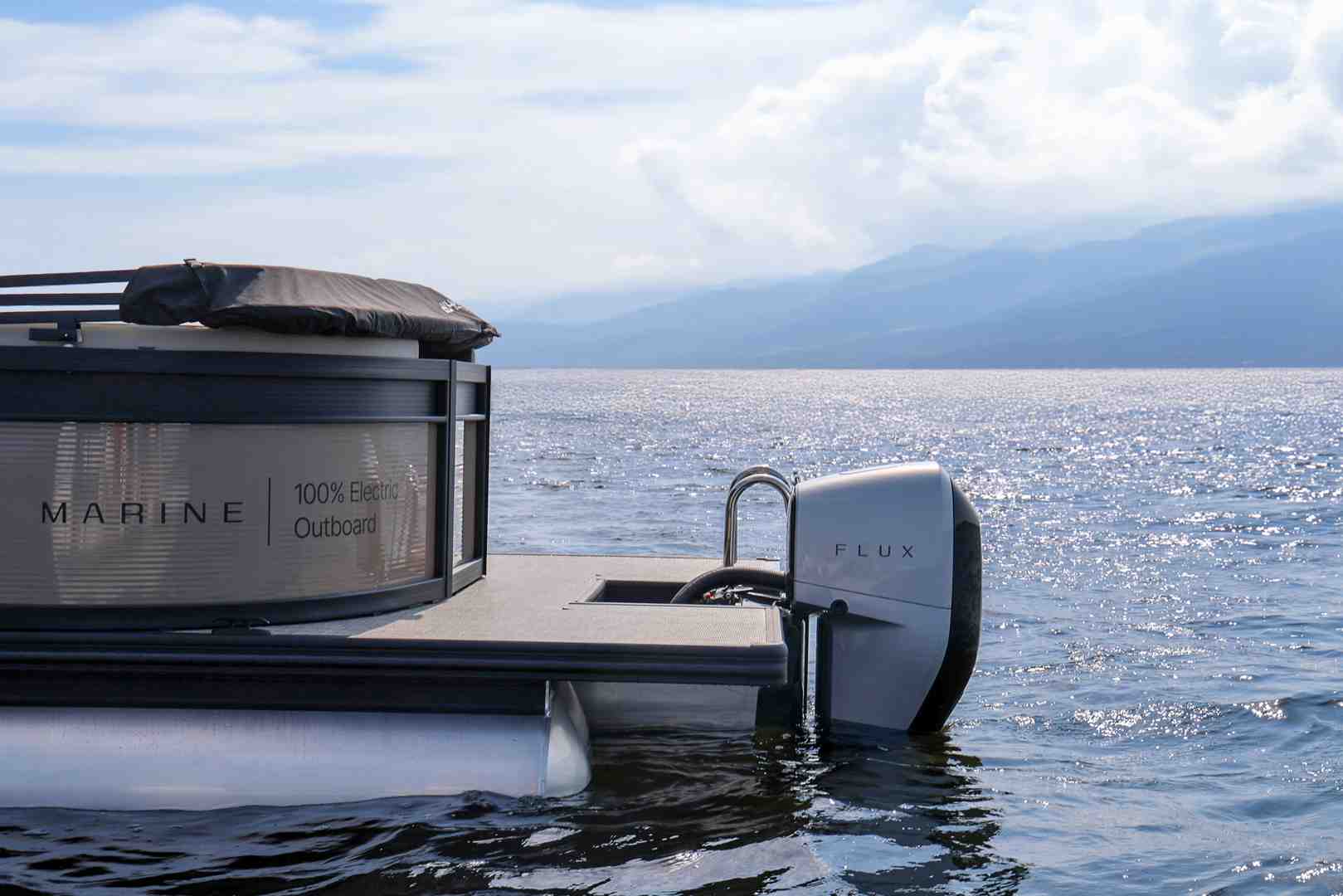
A 10 hp electric outboard boat motor delivers clean, quiet propulsion for small boats—typically ranging from 9.9 to 10kW in electric power output. These motors replace traditional gas engines on jon boats, pontoons, sailboats, tenders, and workboats, offering instant torque, zero emissions at the point of use, and minimal maintenance.
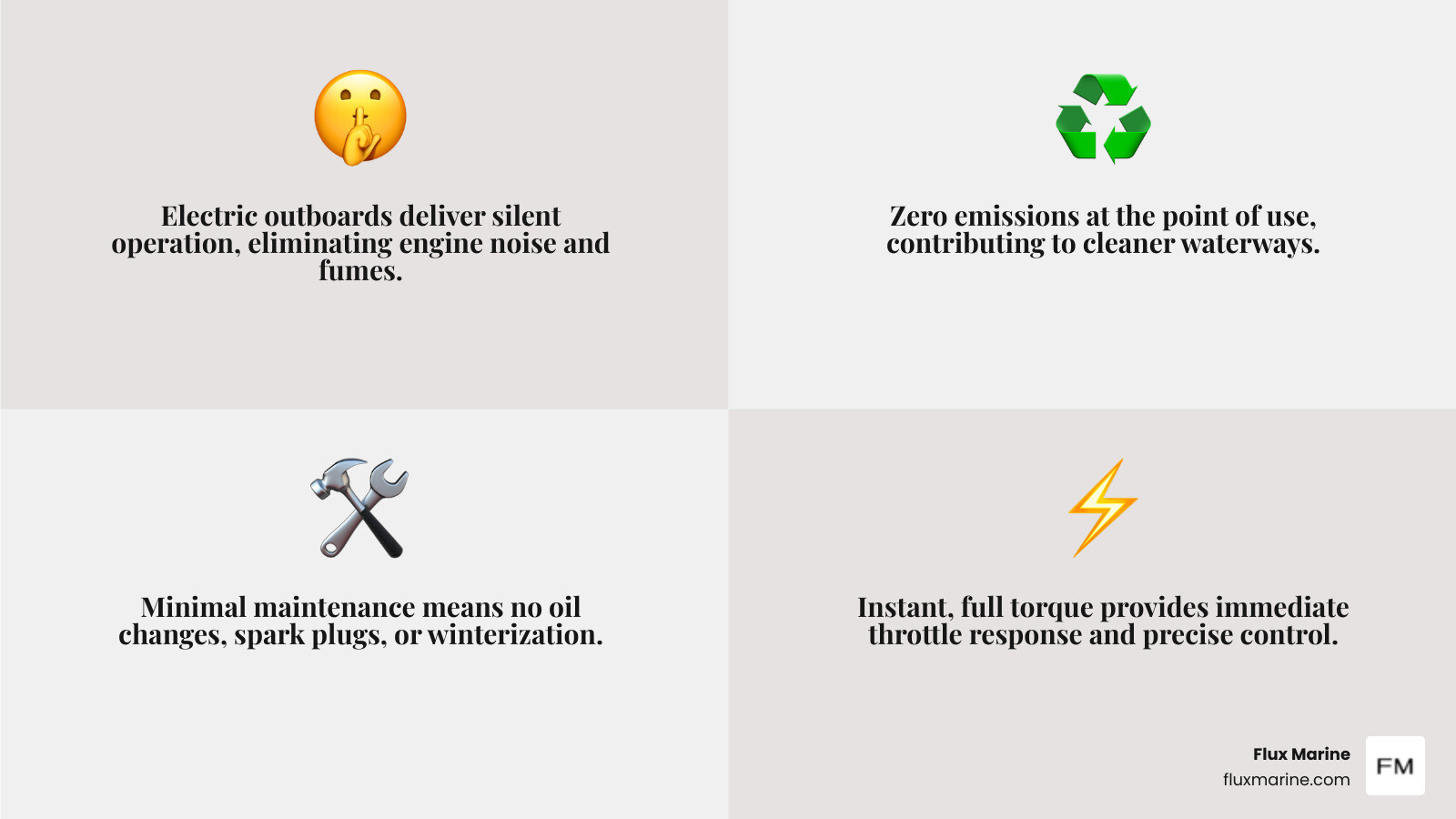
Key advantages of a 10 hp electric outboard boat motor:
- Silent operation – No engine noise or exhaust fumes
- Instant throttle response – Full torque available immediately
- Lower lifetime costs – No fuel, oil changes, or spark plugs
- Zero winterization – No fuel system maintenance required
- Regulatory compliance – 9.9 hp models meet "under 10 hp" lake restrictions
- Lightweight design – About 20% lighter than comparable gas outboards
- Smart features – GPS range prediction, app connectivity, battery monitoring
Electric outboards have evolved from low-power trolling motors into serious propulsion systems. Development of lightweight lithium batteries has made electric motors viable for real-world boating—with total system weights now comparable to 2.5 hp gas engines but delivering three to four times the power.
The choice between electric and gas is no longer about sacrifice. Modern electric outboards match gas performance in most recreational and commercial use cases, while eliminating the noise, fumes, and maintenance that come with combustion engines.
I'm Benjamin Sorkin, founder and CEO of Flux Marine, where we engineer high-performance electric outboard motors and powertrain technology for recreational, commercial, and charter applications. Our work focuses on delivering 10 hp electric outboard boat motor systems that match or exceed gas engine performance without fuel, fumes, or frequent maintenance.
Why boaters are switching from gas to electric:
Gas outboards require regular oil changes, spark plug replacement, fuel system maintenance, and winterization. They produce exhaust fumes, spill fuel during refueling, and deliver power inconsistently at low RPM.
Electric outboards eliminate all of that. No pull-start. No warm-up. No greasy maintenance. Just clean, instant power when you need it.
The shift is happening because the technology finally works. Battery energy density has improved. Motor efficiency has increased. Charging infrastructure is expanding. And total cost of ownership now favors electric in many real-world scenarios.
Performance in Practice: Speed, Range, and What Impacts Them
When considering a 10 hp electric outboard boat motor, understanding its typical speed and range is crucial. These metrics aren't static; they vary significantly based on the boat it's powering and how it's being used. For instance, a 10 hp electric outboard can achieve speeds of around 8 mph (13 kph) with a runtime of 3 hours and a range of 24 miles (39 km) at moderate power settings on an appropriately sized boat. However, for some systems, a range of over 40 miles at 5 mph on a single charge is achievable, depending heavily on the boat and battery configuration.
The hull speed of a boat, particularly for displacement hulls, will inherently limit how fast it can travel, regardless of the motor's horsepower. This means a 10 hp electric outboard can effortlessly push a displacement hull to its maximum efficient speed, often with power to spare. For lighter, planing hulls, the motor can help achieve higher speeds, but the overall range will be shorter due to increased power consumption.
Our electric outboards are engineered for efficiency, ensuring that you get the most out of every charge. We focus on delivering real-world performance that meets the demands of recreational and commercial boaters in our service areas, from the calm waters of Rhode Island to the busy marinas of Florida.
What Determines Speed and Range with a 10 HP Electric Outboard?
Several critical factors influence the speed, runtime, and range you can expect from a 10 hp electric outboard boat motor:
- Boat Type and Size: Lighter, smaller boats will naturally achieve higher speeds and longer ranges than heavier, larger vessels. A 12-foot aluminum boat with one person, for example, can see speeds from 4 mph (6.5 kph) at lower power settings up to 15 mph (24.3 kph) at full throttle.
- Total Weight: The combined weight of the boat, passengers, gear, and batteries directly impacts performance. More weight requires more energy to move, reducing both speed and range.
- Hull Design: As mentioned, displacement hulls have a theoretical hull speed limit. Planing hulls can go faster, but require significantly more power to get onto a plane. Our systems are designed to provide efficient thrust across various hull types.
- Propeller Selection: The right propeller is vital. An optimized propeller design can prioritize either more thrust (for heavier loads or displacement boats) or greater speed (for lighter, faster boats).
- Water Conditions: Wind, currents, and waves all create drag and demand more power from the motor, thus reducing range and potentially speed.
- Operator Habits: How you use the throttle is the single biggest determinant of range. Reducing your speed by even half a knot can dramatically increase your range. Operating in the most efficient power range possible is key for longer journeys.
We design our systems to give you precise control over these variables, allowing you to optimize your boating experience.
Understanding 9.9 HP vs. 10 HP: Regulatory and Practical Considerations
You might wonder why many manufacturers produce 9.9 hp outboard motors instead of a round 10 hp. This isn't a coincidence; it's a direct response to boating regulations.
Many inland bodies of water and specific states have motor restrictions for "under 10HP" only. Additionally, some states require boat registration for vessels with outboard motors larger than 10 HP. By producing a 9.9 hp model, manufacturers allow boaters to comply with these regulations, often avoiding registration requirements or gaining access to restricted waterways.
For example, a boater in New York might choose a 9.9 hp electric outboard to avoid additional registration paperwork or to use their boat on a lake with a specific horsepower limit. Our focus is on providing solutions that integrate seamlessly with your boating lifestyle, including navigating these regulatory landscapes. The performance difference between a 9.9 hp and a true 10 hp is often negligible in real-world use, making the regulatory compliance the primary driver for this horsepower distinction.
Inside the Technology: How a 10 HP Electric Outboard Boat Motor Works
The sophistication of a modern 10 hp electric outboard boat motor goes far beyond just a battery and a motor. These systems integrate advanced technology to deliver superior performance, reliability, and user experience.
At the core, our electric outboards use advanced direct-drive, brushless DC motors. This design eliminates the need for complex gearboxes found in many traditional outboards, which means significantly less noise and virtually no maintenance concerns associated with gear wear and oil changes. This also contributes to a cleaner, quieter boating experience, a hallmark of our commitment to a better marine industry.
Key technological advancements and features to look for include:
- Battery Management Systems (BMS): An intelligent BMS is crucial. It monitors battery health, prevents overloads, optimizes energy flow, and extends battery lifespan. It can also manage power output to ensure safety and prevent damage, especially in demanding conditions.
- Hydrogeneration: For sailboats, some electric outboards and pod drives are capable of hydrogeneration. This means that while under sail, the propeller can turn due to the force of the water, and the motor acts as a generator, recharging the battery. This feature extends range and reduces reliance on shore power. Our X-Series motors, for example, feature highly-integrated hydrogeneration.
- Smart Displays and GPS Integration: Onboard computers with integrated GPS are becoming standard. These displays provide real-time data such as speed, input power, state of charge, and remaining range. They can even predict range based on current conditions and consumption, helping you plan your journey with confidence.
- App Connectivity: Many modern electric outboards offer app connectivity via Wi-Fi and Bluetooth. This allows for digital monitoring of motor information, performance data, and even wireless firmware updates for the propulsion system, ensuring you always have the latest features and optimizations. Our intelligent connected systems are designed to keep you informed and in control.
These integrated technologies make our electric outboards not just powerful, but smart, reliable, and a pleasure to use. For a deeper dive into how electric motors deliver their power, you can read more about it here: Understanding Torque.
Battery and Charging: What to Know for 10 HP Electric Outboards
The battery is the heart of any 10 hp electric outboard boat motor, and its technology and capacity are fundamental to performance, range, and overall cost. The development of lightweight lithium batteries has been a game-changer, making electric outboards a truly viable alternative to gas.
- Lithium-ion Battery Technology: We primarily use advanced lithium-ion batteries due to their high energy density, lighter weight, and longer cycle life compared to older lead-acid batteries. This means more power in a smaller, lighter package. A typical 10 hp electric outboard system will require a battery bank, often 48-volt, with capacities ranging from 1 kWh to several kWh, depending on your desired range and usage.
- Capacity vs. Range: Battery capacity directly dictates your potential range and runtime. A larger capacity battery (measured in Watt-hours, Wh) will provide a longer operating time. However, larger batteries also mean more weight and higher initial cost. It's about finding the right balance for your specific needs.
- Battery Weight: While the motor itself is often lighter, the battery bank can add significant weight. However, even with batteries, the total system weight of our electric outboards is often comparable to, or lighter than, a traditional gas outboard with a full fuel tank. For example, some 10 hp equivalent electric outboards, including their batteries, are designed to be lighter than comparable gas outboards, easing portability and installation.
- Charging Times and Options: Charging flexibility is key.
- Shore Power: Most electric outboard batteries can be charged using standard shore power (AC) at the dock. Charging times vary depending on battery capacity and charger output, but a full charge can take several hours.
- DC Charging: Optional 12V or 24V DC chargers are available, allowing you to charge from your boat's auxiliary power system or a vehicle.
- Solar Charging: For extended trips or off-grid boating, solar charging can significantly extend your range. Solar panels can provide continuous power, effectively making your range "unlimited" in sunny conditions if your consumption matches generation.
- Hydrogeneration: As discussed, for sailboats, hydrogeneration can also contribute to charging while underway.
We recommend consulting with our experts to determine the ideal battery capacity for your boat and how to best integrate charging solutions. Understanding the evolution of marine batteries is key to appreciating these advancements: From Lead Acid to Solid State: The Evolution of Marine Batteries.
Outboard Installation: Space, Hydrodynamics, and Suitability
Installing a 10 hp electric outboard boat motor brings distinct advantages, particularly concerning space and hydrodynamics. Unlike traditional combustion engines that require fuel tanks, extensive wiring, and larger mounting footprints, electric outboards offer a more streamlined setup.
- Space-Saving Benefits: Because the fuel system is eliminated, you reclaim valuable space in your boat, which can be used for storage, additional seating, or larger battery banks. The motor itself is often more compact, especially direct-drive models.
- Hydrodynamic Efficiency: Our electric outboards are designed to minimize drag, contributing to overall hydrodynamic efficiency. This means more of the motor's power is translated into propulsion, rather than being wasted by resistance.
- Suitability for Different Hull Types: Electric outboards are highly adaptable. They perform exceptionally well on small runabouts, jon boats, and tenders, providing ample power for their size. For sailboats, a 10 hp electric outboard can serve as reliable auxiliary propulsion, often with the added benefit of hydrogeneration. Pod drives, another form of electric propulsion, can also be a space-saving alternative, particularly for sailboats, as they are mounted under the hull and can offer even greater hydrodynamic benefits. However, for many applications, the versatility and ease of installation of an outboard motor remain the preferred choice.
We ensure that our electric propulsion systems are not only powerful but also integrate seamlessly with a wide range of vessel designs, providing a clean and efficient installation.
Ownership Realities: Cost, Maintenance, and Safety
The decision to invest in a 10 hp electric outboard boat motor often comes down to the practicalities of ownership: cost, maintenance, and safety. While the initial purchase price for an electric outboard and its battery system can sometimes be higher than a comparable gas engine, the long-term value proposition is compelling.
Let's look at a simplified comparison of the total cost of ownership over time:
Category10 HP Electric Outboard (Estimated)10 HP Gas Outboard (Estimated)Initial Price$6,000 - $10,000+$2,500 - $5,000Annual Energy$50 - $150 (charging costs)$200 - $500 (fuel costs)Annual Maintenance$0 - $50 (anodes, freshwater rinse)$200 - $400 (oil, filters, plugs)5-Year Total (Approx.)$6,250 - $10,750+$3,700 - $7,000
Note: These are illustrative estimates. Actual costs vary widely based on usage, electricity/fuel prices, specific models, and maintenance schedules.
While the initial outlay for an electric system may be higher, the significantly lower annual energy and maintenance costs mean that electric can become more cost-effective over its lifespan, depending on hours of use and local energy prices. For example, if a gas outboard incurs $235 in annual maintenance and $250 in annual fuel costs, an electric system with $0 maintenance and $85 in energy costs quickly closes the gap. Our goal at Flux Marine is to provide systems that offer a compelling return on investment through reduced operational expenses and improved reliability.
Maintenance Requirements for a 10 HP Electric Outboard
One of the most significant advantages of a 10 hp electric outboard boat motor is its minimal maintenance. The simplicity of electric propulsion means you can spend more time enjoying the water and less time in the shop.
Compared to a gasoline engine, an electric outboard requires:
- No Oil Changes: There's no engine oil to check or change.
- No Spark Plugs: No spark plugs to inspect or replace.
- No Fuel Filters: No fuel system to gum up or filters to replace.
- No Winterization Headaches: You don't need to drain fuel, fog the engine, or perform other complex winterization procedures.
- Minimal Routine Checks: The primary maintenance tasks involve:
- Freshwater Rinse: Always wash the outboard with freshwater after use in saltwater to prevent corrosion.
- Anode Checks: Periodically check the sacrificial anodes (typically every 3 months) and replace them if they are significantly depleted.
- Propeller Inspection: Inspect the propeller and shear pin for damage or mess.
Our direct-drive electric motors are designed for maintenance-free operation, meaning no regular gear oil changes are needed. This ease of use and reduced maintenance make a 10 hp electric outboard boat motor an excellent choice for beginners, seniors, and anyone who wants a hassle-free boating experience.
Safety Features to Expect
Safety is paramount in marine environments, and 10 hp electric outboard boat motor systems are designed with a range of features to protect you and your vessel.
Common safety features include:
- Magnetic Kill Switch: This essential safety device immediately cuts power to the motor if the operator falls overboard or moves too far from the helm.
- Overload and Thermal Protection: Integrated systems within the motor and battery management unit (BMS) monitor operating temperatures and current draw. If the motor or battery gets too hot or is overloaded, the system will automatically reduce power or shut down to prevent damage.
- Waterproofing: Electric outboards are built to withstand marine conditions. Look for IP (Ingress Protection) ratings, such as IP67, which indicates the motor is completely dust-tight and protected against immersion in water up to 1 meter for 30 minutes.
- Built-in Motor Protection: Advanced internal diagnostics help safeguard the motor from various electrical and mechanical faults.
We prioritize safety in our designs, ensuring that our electric outboards are not only powerful and efficient but also inherently safe for all users. For more information on marine safety, you can explore our resources: Is Electric Boating Safe?.
Frequently Asked Questions About 10 HP Electric Outboards
What Boat Types Work Best with a 10 HP Electric Outboard?
A 10 hp electric outboard boat motor is incredibly versatile and can effectively power a wide range of vessels, making it ideal for diverse boating activities in places like Rhode Island, Florida, and New York.
It's particularly well-suited for:
- Jon Boats: Perfect for fishing or exploring shallow waters.
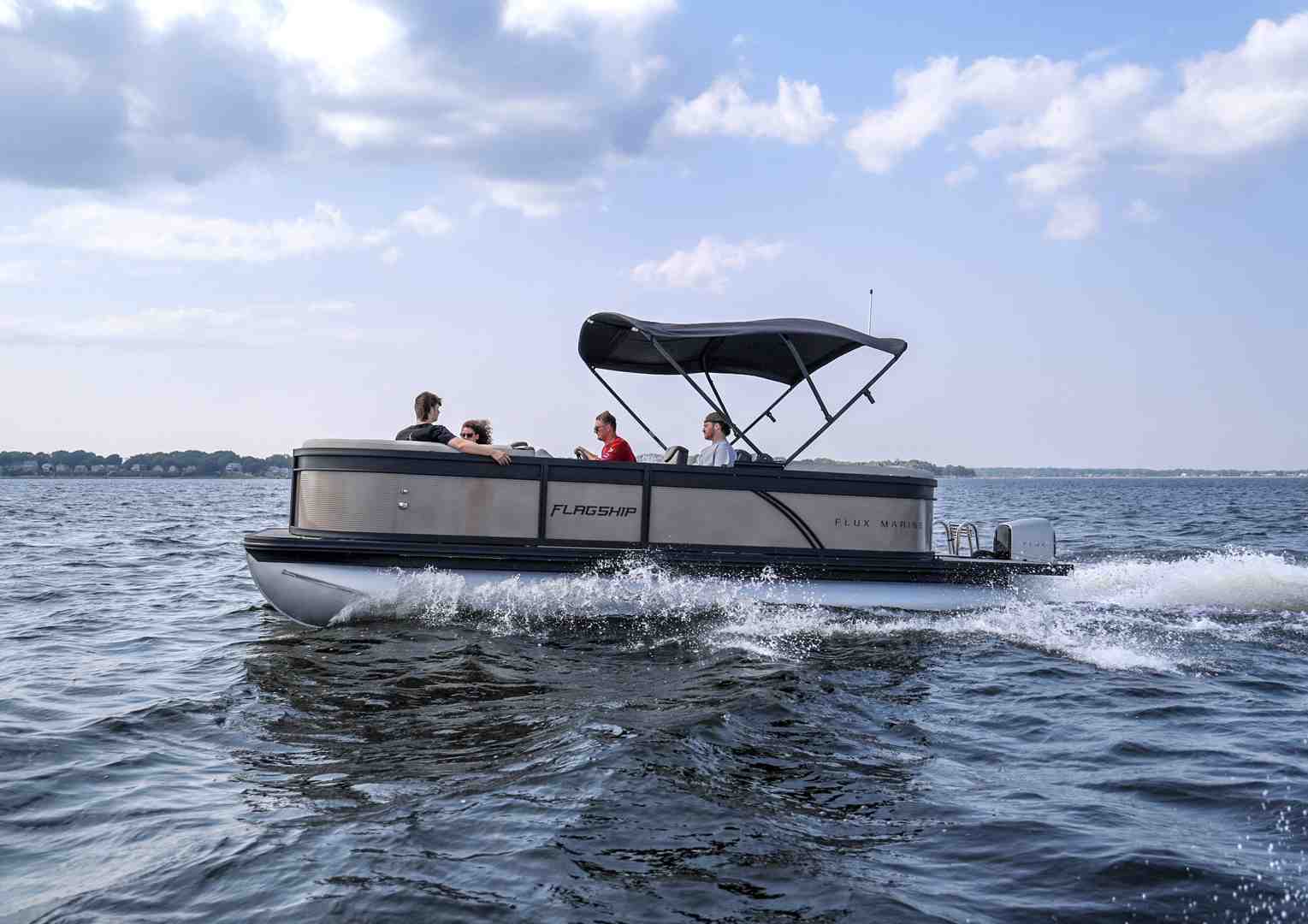
- Pontoons: Provides quiet, clean propulsion, especially useful on lakes with motor restrictions.
- Sailboats (up to 25-30 feet and 2,500-3,000 pounds): Serves as reliable auxiliary power for maneuvering in and out of marinas or during calm conditions. Some larger yachts (up to 3000kg) can even use a low-pitch prop as an ideal replacement for high-thrust outboards.
- Tenders and Dinghies: Excellent for transporting crew and supplies from a larger vessel to shore, offering quiet operation and easy handling.
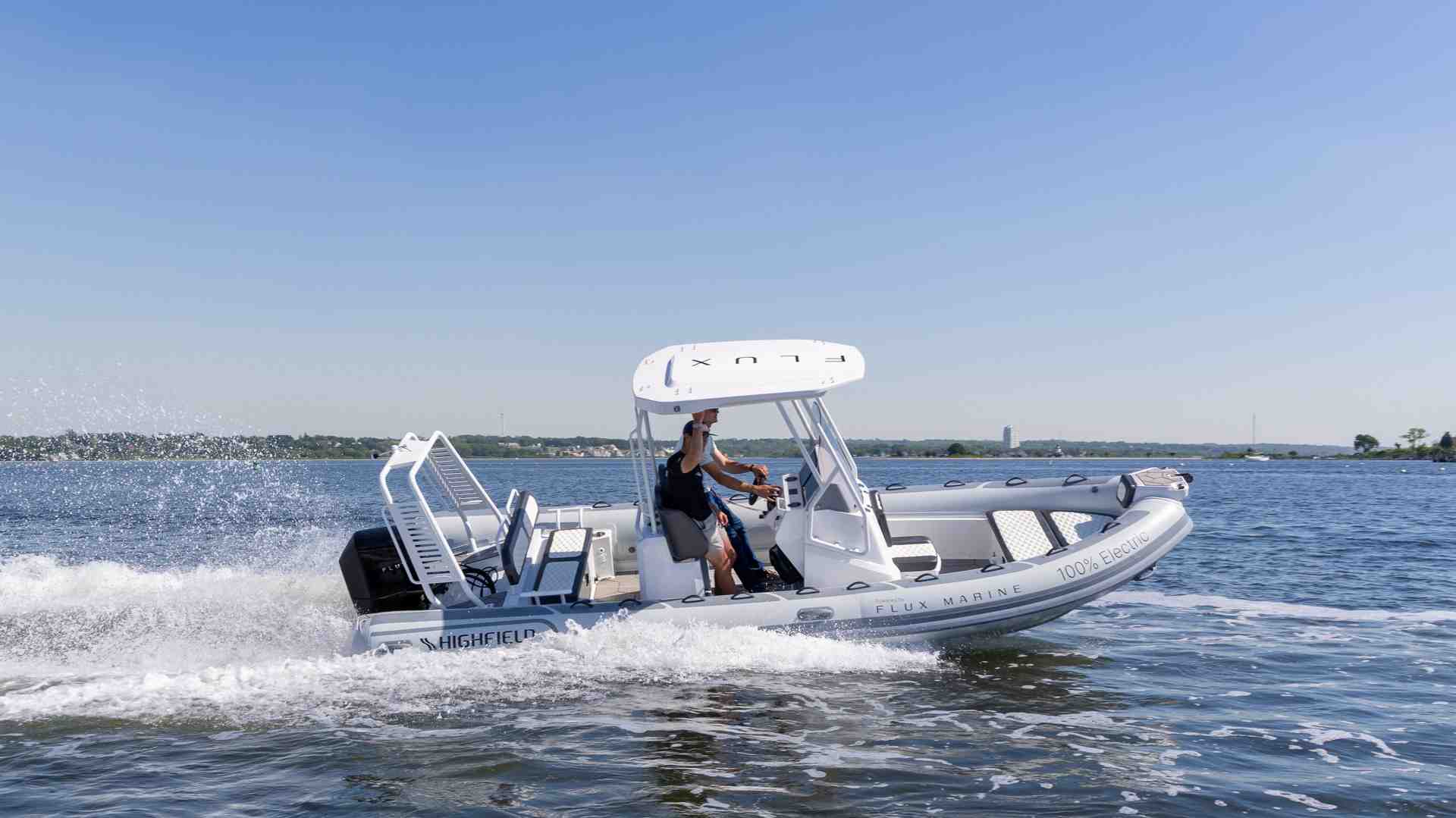
- Inflatables: Provides sufficient power for recreational use.
- Workboats: Ideal for commercial applications where quiet operation, low emissions, and reliable performance are valued, such as for oyster farms or research vessels.
- Boats on Restricted Waterways: The 9.9 hp equivalent models ensure compliance with "under 10HP" limits on many lakes and rivers.
The ease of use, quiet operation, and lack of fumes make electric outboards a superior choice for many boat owners looking for an improved experience.
How Much Do 10 HP Electric Outboards and Batteries Weigh?
Weight and portability are critical considerations, especially for boaters who frequently transport or remove their outboard. A 10 hp electric outboard boat motor system, including its battery, is designed with portability in mind.
- Motor Weight: The motor unit of a 10 hp equivalent electric outboard typically weighs around 80 lbs (36 kg) or even less. For example, some 10 hp equivalent models are less than 80 lbs and come with foldable and removable tillers, significantly enhancing portability. This is generally lighter than comparable gasoline outboards, making them easier to mount, remove, and carry. Some electric outboards are about 20% lighter than comparable gas outboards in their class.
- Battery Weight: The battery is usually the heaviest component. For a 10 hp equivalent system, a lithium-ion battery pack can weigh anywhere from 20 lbs (9 kg) to over 100 lbs (45 kg), depending on its capacity and chemistry. However, many systems are designed with detachable batteries, allowing you to carry the motor and battery separately.
- Portability: The overall system weight (motor + battery) is often comparable to or less than a traditional 2.5 hp gas outboard with a full fuel tank, despite delivering significantly more power. This makes electric outboards much easier to handle, transport in a vehicle, and install on a transom.
Our designs focus on optimizing the power-to-weight ratio, ensuring our systems are both powerful and manageable for our customers.
How Does Electric Outboard Torque Compare to Gas?
One of the most compelling advantages of a 10 hp electric outboard boat motor over its gasoline counterpart is its torque delivery.
- Instant Torque: Electric motors deliver 100% of their available torque from zero RPM. This means you get instant thrust the moment you apply power, without the lag associated with gas engines. This characteristic is particularly beneficial for:
- Low-RPM Maneuverability: Docking and slow-speed maneuvering become incredibly precise and effortless. The instant response allows for fine adjustments, giving you superior control in tight spaces.
- Quick Acceleration: Whether you're getting on plane or needing a burst of speed to avoid an obstacle, the immediate torque from an electric motor provides responsive acceleration.
- Smooth Operation: The consistent and linear power delivery translates to a smoother, more controlled boating experience compared to the often-jerky power curve of a gas engine.
This superior torque at low RPMs significantly improves the driving experience, making boating more enjoyable and less stressful. To learn more about the science behind this, explore: More on electric motors.
Conclusion: The Practical Case for Switching to Electric Propulsion
The journey from gas guzzlers to green gliders is well underway, and the 10 hp electric outboard boat motor stands as a testament to the advancements in marine propulsion. We've explored the myriad benefits, from the whisper-quiet operation and instant torque to the significantly reduced maintenance and environmental advantages.
Choosing a 10 hp electric outboard boat motor means embracing a cleaner, quieter, and more enjoyable boating experience. You'll benefit from:
- Improved Performance: Instant torque, precise control, and efficient power delivery that matches or exceeds gas engines for most applications.
- Lower Operating Costs: Freedom from fuel purchases, oil changes, and complex winterization procedures translates to substantial savings over time.
- Environmental Responsibility: Zero emissions at the point of use, no fuel spills, and a reduced carbon footprint contribute to healthier waterways and a cleaner planet for future generations.
- Advanced Technology: Integrated smart features like GPS, app connectivity, and advanced battery management improve safety and user convenience.
Our commitment at Flux Marine is to engineer electric propulsion systems that not only meet but exceed the expectations of discerning boaters. We believe in delivering a powerful, efficient, sustainable, and enjoyable boating experience, making ownership easier and contributing to a cleaner, quieter industry. The future of boating is electric, and we're here to help you steer it.
Ready to experience the future of boating? Find how our electric propulsion systems can transform your time on the water.
Learn how Flux Marine’s electric propulsion works

.jpg)