.svg)

Why Electric Boats for Lakes Are Changing the Game
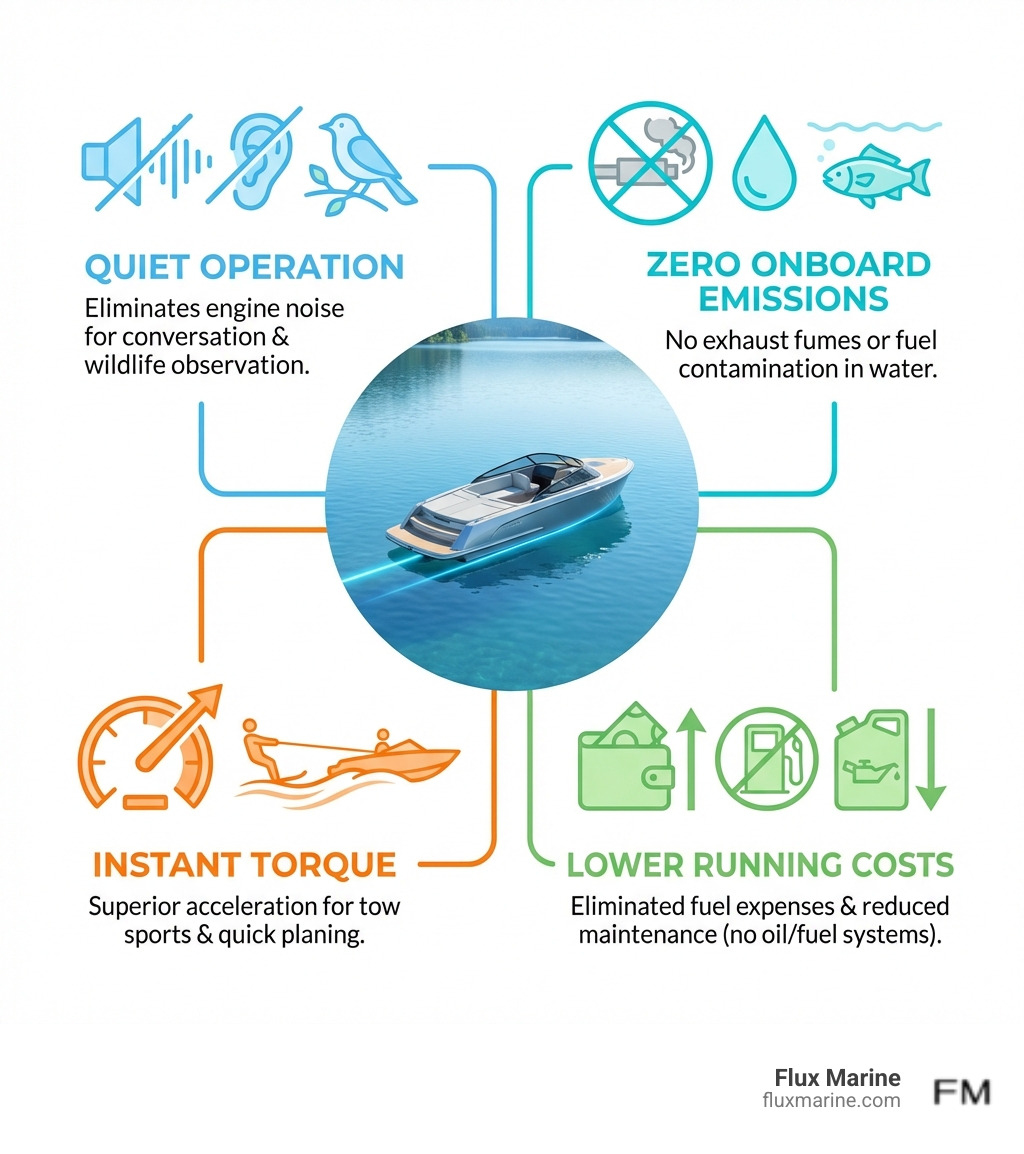
Electric boats for lakes are a practical and powerful alternative to gas-powered boats, offering superior performance, lower operating costs, and a significantly improved on-water experience. For activities ranging from family cruising and dawn fishing to towing water skiers, electric propulsion delivers instant torque, zero fumes, and near-silent operation that redefines time spent on the water.
Key Benefits of Electric Boats for Lake Use:
- Quiet Operation – Conversation and nature sounds replace engine noise
- Zero Onboard Emissions – No exhaust fumes or fuel spills polluting the water
- Instant Torque – Superior acceleration for skiing, wakeboarding, and quick planing
- Lower Running Costs – No fuel purchases, fewer maintenance tasks, simplified winterization
- Lake-Friendly – Compliant with noise and emission restrictions, ideal for protected waters
This guide explains what to look for when choosing an electric boat for lakes, how performance compares to gas, and what you need to know about range, charging, and long-term ownership costs.
I'm Benjamin Sorkin, founder and CEO of Flux Marine, where we engineer high-output electric outboard motors for recreational, commercial, and charter applications. I've spent the last decade developing electric propulsion systems purpose-built for real-world boating, including intensive lake use where performance, reliability, and range matter most.
Why Choose an Electric Boat for Lake Use?
Experienced boaters are increasingly turning to electric propulsion for practical reasons that go beyond the motor itself. While the environmental benefits are clear, the decision to switch is often driven by a desire for a better on-water experience. Electric boats provide a solution that improves enjoyment of the water without the noise, fumes, and constant maintenance associated with traditional gas engines.
The On-Water Experience: Quiet, Clean, and Uninterrupted
One of the most immediate and appreciated benefits of electric boats is the profound quietness they offer. Imagine gliding across a glassy lake at sunrise, the only sounds being the gentle lapping of water against the hull and the calls of birds. This is the reality of electric boating. Without the roar of a gasoline engine, conversations flow easily, and the serene beauty of nature can be fully appreciated.
Beyond the silence, electric boats eliminate exhaust fumes. As boaters, we know that the smell of gasoline and diesel can detract from the experience, and for some, like passengers prone to seasickness, these fumes can worsen their discomfort. With zero emissions, electric boats ensure cleaner air for everyone on board, making every moment on the water more enjoyable. This quiet, fume-free environment also contributes to a safer boating experience, as highlighted in our resources on More info about electric boat safety.
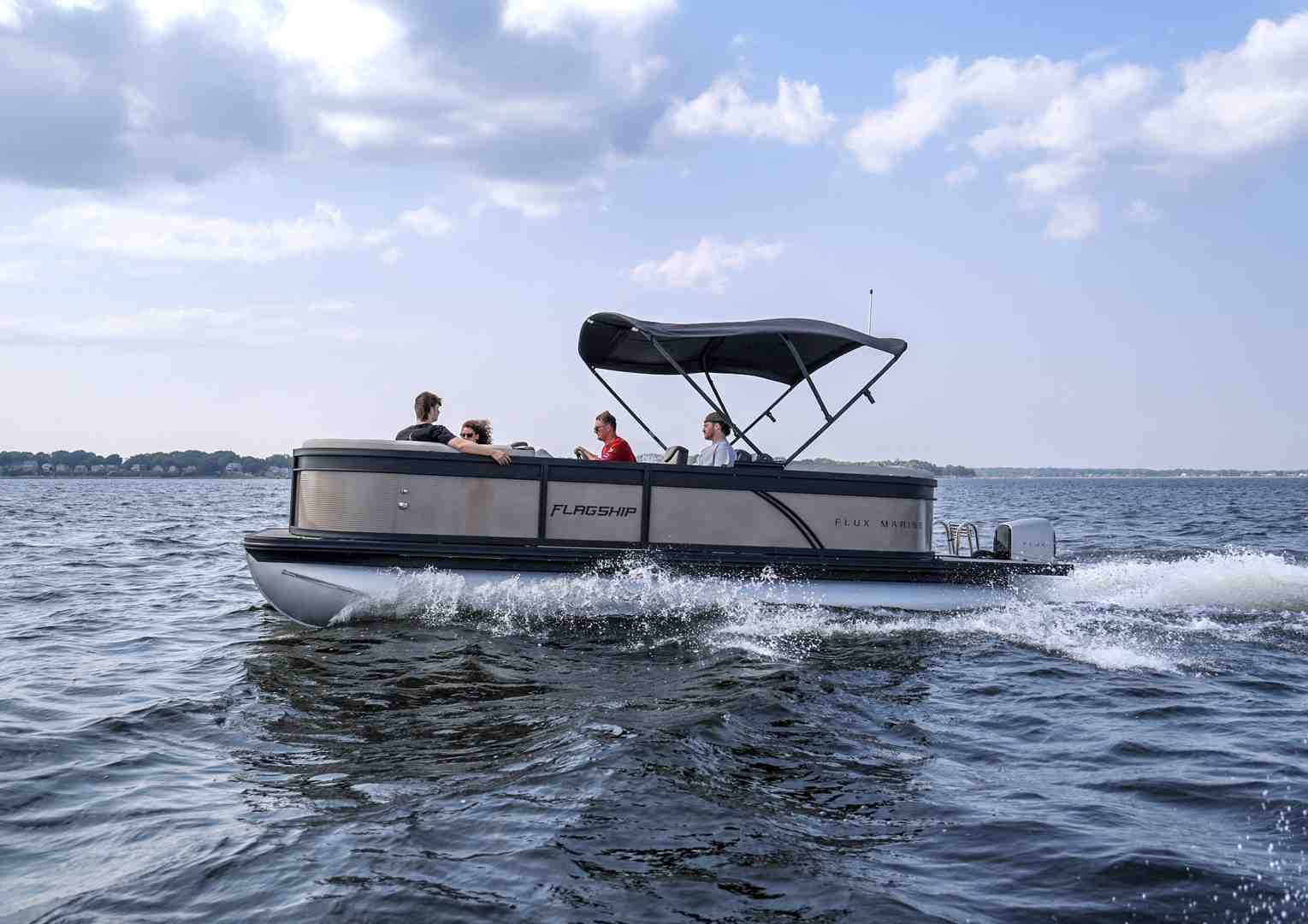
Consider a pontoon boat, often referred to as a "waterborne living room." Who wants gas engine fumes rolling through their comfortable, open space? Electric propulsion transforms these vessels into truly serene platforms for socializing, sunbathing, or simply enjoying the view. Our electric outboards provide quiet, smooth operation that facilitates conversation underway and improves communication while docking.
Environmental Advantages for Sensitive Lake Ecosystems
The environmental benefits of electric boats are particularly significant for sensitive lake ecosystems. Our electric propulsion systems produce zero fumes and zero emissions, leaving nothing behind but ripples. This means no harmful pollutants entering the water, no oil or fuel leaks contaminating fragile habitats, and no unpleasant odors disturbing wildlife or other lake users.
This commitment to cleanliness helps protect water quality, which is crucial for aquatic life and human recreation. By minimizing our environmental footprint, electric boats support healthier lakes and contribute to green lake initiatives. We believe that choosing electric is a powerful way to make a difference, as we explore in our discussion on How electric boats are making a difference. It's about enjoying the waterways we love while actively preserving them for future generations.
Performance and Handling: Electric vs. Gasoline on the Lake
When considering electric boats for lakes, a common question revolves around performance. Many experienced boaters are accustomed to the feel of gasoline engines and wonder if electric propulsion can deliver a comparable, or even superior, experience. Our engineering focuses on ensuring that electric doesn't mean compromise.
Understanding Electric Motor Torque and Acceleration
One of the standout performance characteristics of electric motors is their instant torque. Unlike internal combustion engines that need to rev up to reach peak power, electric motors deliver maximum torque from zero RPM. This translates to incredibly responsive acceleration, often referred to as a "superior hole shot."
For activities like waterskiing, wakeboarding, and wake surfing, this instant power delivery is a significant performance benefit. It gets skiers out of the water faster and provides a consistent, smooth pull without any lag. Even for general cruising, the immediate responsiveness makes maneuvering and reaching planing speed much more efficient. We've seen this in our own innovations, including powering The world's fastest electric boat, powered by Flux Marine.
Comparing Speed and Handling Characteristics
While instant torque is a clear advantage, how do electric boats compare in terms of top speed and handling? Modern electric propulsion systems are designed to match and even exceed the performance of comparable gasoline engines. For example, some high-performance electric boats can achieve top speeds of 30-40 knots, making them suitable for thrill-seekers. However, range significantly decreases at higher speeds.
For lake use, efficient cruising speeds are often more practical. Electric boats excel here, providing smooth, stable, and predictable handling. The quiet operation itself contributes to a more focused and enjoyable handling experience. We find that a well-designed electric boat of a similar size to a traditional bay boat performs no differently in terms of speed and handling. In fact, for low-speed maneuvering, such as docking or navigating crowded areas, the precise control offered by electric motors is a distinct advantage.
MetricElectric OutboardsGas OutboardsAccelerationInstantaneous, full torqueLag, builds with RPMLow-Speed ControlPrecise, silentClunky, louderNoise at TrollingSilentLoud, noticeable engine humMaintenance ChecksMinimal, fewer moving partsExtensive, regular fluid checks
Key Factors When Choosing Electric Boats for Lakes
Selecting the right electric boat for your lake adventures involves considering several key factors, from the type of boat to its power system and charging needs. We help our customers in Bristol, RI, West Palm Beach, FL, Norfolk, VA, Brookhaven, NY, and Brick, NJ, steer these choices to find the perfect fit.
Matching the Boat Type to Your Lake Activities
The versatility of electric boats for lakes means there's a solution for nearly every boater.
- Pontoon Boats: These are ideal for electric propulsion. Their large, stable platforms and efficient movement through the water mean that electric motors can provide ample power for comfortable cruising, socializing, and entertaining. The quiet operation perfectly complements the "living room on the water" experience. A range of electric outboard power levels are available to suit pontoon boats on various lake sizes, from small, restricted waters to larger lakes with wind and waves.
- Runabout Boats: Ranging from 16 to 27 feet, runabouts are compact, versatile vessels perfect for day trips and water activities like tubing or wakeboarding. High-output electric outboards offer a clean, powerful, and quiet alternative for these agile boats, providing the instant torque needed for tow sports.
- Fishing Boats: For anglers, the stealth and quietness of an electric boat can be a significant advantage, allowing them to approach fishing spots without spooking fish.
- Hull Design: The efficiency of the hull plays a major role in electric boat performance and range. Displacement hulls are best for slow, efficient cruising, while planing hulls, often combined with lightweight materials and advanced aerodynamics, are designed for higher speeds. Some cutting-edge designs even incorporate hydrofoil technology to "fly" over the water, drastically reducing drag and extending range.
Understanding Battery, Range, and Power for electric boats for lakes
When we discuss electric boats for lakes, understanding the power system is crucial.
- Battery Capacity (kWh): This is perhaps the most important metric, indicating how much energy the battery can store. Think of it like the size of your gas tank. Modern electric boats often use advanced lithium-ion batteries for their high energy density and durability. Some larger vessels feature battery packs comparable to several electric cars combined.
- Range Calculation: The "range" of an electric boat is not a static number; it depends significantly on speed, weather conditions, and hull design. Manufacturers often quote a maximum range at a lower, more efficient cruising speed. For example, a boat might offer 100 nautical miles at 22 knots, but significantly less at its top speed. It's essential to consider your typical use case and the distances you plan to cover. Our team can help you calculate real-world range based on your specific needs.
- Motor Power (kW/HP): Electric motors are rated in kilowatts (kW), which can be converted to horsepower (HP) for comparison with gasoline engines. Matching motor power to boat size and intended use is key. For a small lake where you just want to cruise, a lower HP equivalent might suffice. For tow sports or larger lakes, more power will be needed. Electric propulsion systems are available in a wide range of power outputs, from low-HP equivalents for smaller boats to high-output systems for larger vessels, ensuring there's a suitable option for various applications. Learn more about the technology behind these systems.
Charging Infrastructure and Solutions
Charging your electric boat for lakes is becoming increasingly convenient. While the charging infrastructure in the U.S. is still developing compared to some European regions, it's rapidly expanding, particularly in popular recreational boating hubs like Florida, New York, New Jersey, Virginia, and Rhode Island.
- Dockside Charging: Most electric boats can be charged directly from standard dockside outlets (Level 1 or Level 2 AC charging). Level 1 uses a standard 120V outlet, similar to charging an electric car at home, while Level 2 uses 240V outlets for faster charging.
- Marina Charging Networks: Marinas are beginning to install dedicated electric boat charging stations, offering faster charging options. As the market grows, we anticipate a significant expansion of these networks, making longer trips and overnight stays more feasible.
- Onboard Chargers: Many electric boats come with integrated onboard chargers, allowing you to plug into shore power directly.
- Solar Integration: For extended range or trickle charging while anchored, integrating solar panels can be an effective solution. While solar panels typically don't provide enough power for propulsion at speed, they can significantly extend battery life for accessories or slow cruising. You can find more information about Information on boat solar panels.
We are seeing a trend towards consolidation and strategic partnerships in the electric boating market to improve charging convenience and cost, reflecting the industry's commitment to overcoming logistical challenges.
Cost and Maintenance: The Long-Term Ownership View
While the initial purchase price of an electric boat might sometimes be higher than a comparable gasoline model, it's crucial to look at the total cost of ownership over time. The long-term savings often make electric boats for lakes a financially savvy choice.
Comparing Upfront Costs and Long-Term Savings
The upfront cost of an electric boat varies widely depending on size, features, and battery capacity. However, the absence of fuel costs translates into significant long-term savings. With gasoline prices fluctuating, eliminating fuel entirely is a major financial relief. Over the lifespan of the boat, these savings can easily offset the initial investment.
Consider the cost of gasoline for a typical season of lake boating. For many, this can amount to hundreds or even thousands of dollars. With an electric boat, you're primarily paying for electricity, which is substantially cheaper per "mile" than gasoline. Furthermore, electric boats often hold their value well, potentially leading to a higher resale value due to their advanced technology and environmental benefits. We can help you calculate the annual savings for your specific usage patterns.
A Simpler Maintenance Schedule for electric boats for lakes
One of the most compelling economic benefits of electric propulsion is the dramatically simpler maintenance schedule. Electric motors have significantly fewer moving parts than internal combustion engines. This means:
- No Oil Changes or Filters: Say goodbye to messy oil changes, oil filters, and fuel filters.
- No Fuel System Maintenance: No carburetors to clean, no fuel lines to inspect, no winterizing fuel additives needed.
- Simplified Winterization: The winterization process for electric boats is much simpler, typically involving battery care and ensuring systems are properly shut down.
- Reduced Annual Service Costs: With fewer components subject to wear and tear, annual service requirements are minimal, saving you time and money.
Our electric outboard motors, for instance, feature patented cooling systems that eliminate the need for raw water pumps, impellers, and exhaust systems, further simplifying maintenance. Direct-drive control systems also replace marine transmissions, reducing complexity. This focus on engineering for simplicity translates directly into lower annual operating costs and more time enjoying your lake.
Regulations and Future Outlook
The landscape for electric boats for lakes is continuously evolving, both in terms of regulations and technological advancements. Staying informed helps us make the most of this exciting shift.
Navigating Lake-Specific Boating Regulations
Many lakes, especially those designated as protected natural areas, have specific regulations regarding boat usage. This is where electric boats truly shine.
- "Electric-Only" Lakes: A growing number of lakes are designated "electric-only" to preserve their pristine environment, reduce noise pollution, and protect wildlife. Owning an electric boat grants you exclusive access to these serene waters.
- HP-Restricted Lakes: Some lakes have horsepower (HP) limits for gasoline engines. Electric outboards, which are rated in HP equivalent, often fall within these limits while still providing ample power for lake activities. For example, a 9.9 HP-equivalent electric outboard is suitable for many small lakes where larger motors are restricted, providing sufficient power without violating local rules.
- Noise Ordinances: Even on lakes without explicit electric-only rules, noise ordinances can limit the use of loud gasoline engines, especially during early morning or late evening hours. Electric boats inherently comply with these regulations, allowing for peaceful outings at any time.
It's always important to research local rules for any lake you plan to visit. Resources like online forums often have discussions about local regulations, such as those found on Bass Boat on Electric Only Lakes | The New York Bass Forums, which can provide valuable community insights.
The Future of Electric Propulsion on Inland Waters
The future of electric propulsion on inland waters is bright, driven by rapid advancements in battery technology and charging infrastructure.
- Battery Technology Evolution: We anticipate continued improvements in battery density, meaning smaller, lighter batteries that store more energy, leading to even greater range and performance. Solid-state batteries, for example, promise to be half the weight and a third smaller than traditional lithium batteries, revolutionizing boat design.
- Faster Charging Technology: Just as with electric vehicles, fast-charging technology for boats is becoming more prevalent. We expect to see more high-speed charging stations at marinas, significantly reducing downtime.
- Expanding Charging Infrastructure: The growth of marina charging networks, particularly in key recreational areas across Florida, New York, New Jersey, Virginia, and Rhode Island, will make electric boating more accessible and convenient for everyone.
- Smart Boat Integration: Future electric boats will feature even more sophisticated smart technology, including AI-powered navigation, real-time diagnostics, and over-the-air software updates, enhancing safety, efficiency, and the overall boating experience.
The electric boating market is rapidly growing, fueled by innovation and a collective shift towards sustainability. We are proud to be at the forefront of this movement. To stay updated on the latest developments and breakthroughs, be sure to Read our blog for the latest news.
Conclusion: The Practical Choice for Modern Lake Boating
The shift to electric boats for lakes is more than just a trend; it's a practical evolution in marine propulsion. We've seen how electric boats offer an unparalleled on-water experience defined by quiet operation, zero emissions, and responsive performance. From the instant torque that makes tow sports a breeze to the minimal maintenance that saves you time and money, the benefits are clear.
Choosing an electric boat means embracing a cleaner, quieter, and more enjoyable way to explore our beautiful lakes. It’s a choice that reflects a commitment to environmental stewardship without sacrificing performance or capability. With advancements in battery technology, expanding charging infrastructure, and a focus on user-friendly design, electric boats are ready to meet the demands of today's discerning boater.
At Flux Marine, we are dedicated to engineering electric propulsion systems that deliver exceptional performance, reliability, and lower ownership costs. Our mission is to make boating easier, more powerful, and more sustainable for everyone. We believe that once you experience the silent, powerful glide of an electric boat, you'll understand why it's the practical choice for modern lake boating.
Find the future of marine propulsion and find the perfect electric system for your lake adventures. View available electric propulsion systems.

.jpg)