.svg)

Why Electric Boat Conversion Is Gaining Real Traction
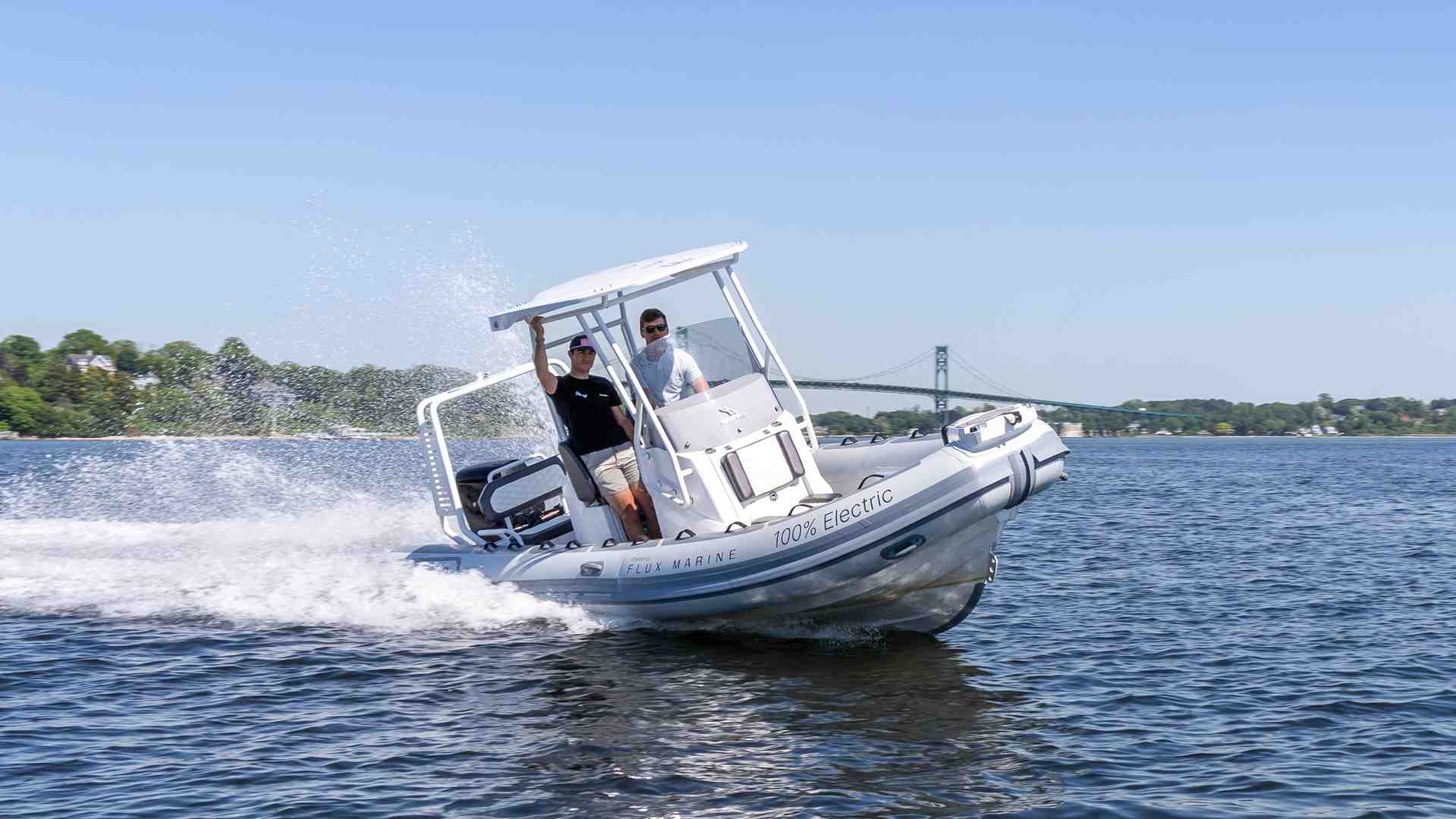
Electric boat conversion is the process of replacing a traditional gas or diesel engine with a modern electric propulsion system—including an electric motor, battery bank, controller, and charging infrastructure. For many boat owners, it's a practical upgrade that eliminates fuel costs, reduces maintenance, and delivers quieter, cleaner operation on the water.
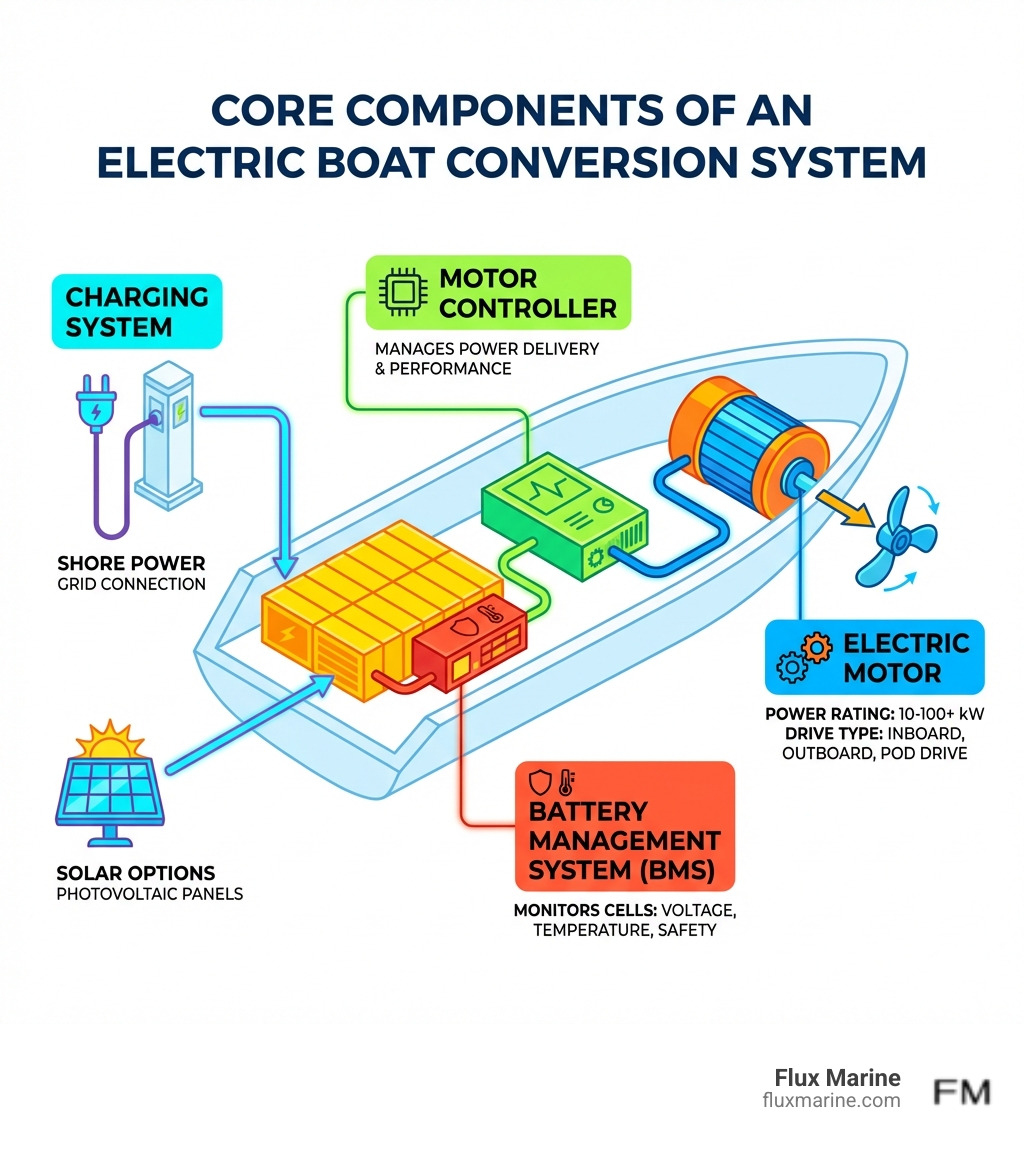
What You Need for a Successful Electric Boat Conversion:
- Electric Motor – Choose between inboard, outboard, or pod drive systems based on your hull and performance needs
- Battery Bank – Lithium-ion (typically LiFePO4) batteries sized for your desired range and power requirements
- Motor Controller – Manages power delivery and motor performance
- Battery Management System (BMS) – Monitors cell voltage, temperature, and ensures safe operation
- Charging System – Shore power, solar panels, or regenerative charging from sailing
- Supporting Hardware – Throttle controls, wiring, propeller optimized for electric drive
Typical Costs:
- DIY Installation: $20,000–$30,000
- Professional Installation: $35,000–$55,000
- Costs vary based on boat size, desired range, and component quality
Performance Expectations:
A typical 10-meter cruising yacht with electric propulsion can motor for 5–6 hours at 4 knots, or 10 hours of motor-sailing, before requiring a charge. Range depends on battery capacity, boat weight, cruising speed, and available regenerative charging.
The shift to electric isn't just about sustainability—it's about better ownership economics and a more enjoyable boating experience. Electric motors require minimal maintenance (no oil changes, fuel filters, or carburetor cleaning), operate silently, and deliver instant torque for precise maneuvering. For coastal cruisers and pontoon owners, electric propulsion now offers real-world performance comparable to gas engines, without the noise, fumes, or frequent upkeep.
I'm Benjamin Sorkin, founder and CEO of Flux Marine, where we've been engineering high-performance electric outboards since 2015 to make electric boat conversion practical for recreational and commercial applications. Before founding Flux Marine, I developed powertrain systems for leading electric vehicle companies and for naval applications, building the technical foundation for scalable, reliable electric marine propulsion.
Why Consider Electric Boat Conversion? Real-World Performance and Ownership
When we talk about electric boat conversion, we're not just discussing a trend; we're addressing a tangible upgrade that improves your boating experience and reduces long-term ownership costs. Imagine gliding out of the marina in Bristol, RI, or cruising the intercoastal in West Palm Beach, FL, with nothing but the sound of water lapping against the hull. This serene experience is a primary advantage of electric propulsion.
Electric motors for boats are battery-powered engines that produce zero emissions. This means no more unpleasant exhaust fumes or fuel spills to contend with, making for a cleaner environment and a more enjoyable time on the water. Our goal at Flux Marine is to make electric propulsion a practical reality for the boating community.
Beyond the environmental benefits, the practical advantages are substantial. Electric motors are inherently simpler than internal combustion engines, with far fewer moving parts. This translates directly to significantly reduced maintenance requirements.
Forget the routine oil changes, fuel filter replacements, spark plug checks, and winterization hassles that come with gas or diesel engines. Electric motors are often described as "maintenance-free" in comparison, simplifying your boating life considerably.
Another key advantage is the instant torque delivery. Unlike gas engines that need to spool up, electric motors provide full torque from zero RPM. This responsiveness is invaluable for precise maneuvering, especially when docking in tight quarters or navigating busy waterways. We've found that this instant power makes berthing far less stressful and more intuitive.
While the initial investment for an electric boat conversion might be higher than replacing a traditional engine, the total cost of ownership often proves to be lower over the lifespan of the system. You eliminate fuel costs entirely, and the reduced maintenance saves both time and money. This economic benefit, coupled with the improved boating experience, makes a compelling case for making the switch.
Pros and Cons of Electric Propulsion:
Here's a balanced look at the benefits and considerations for electric propulsion:
- Pros:
- Low noise and vibration: Enjoy the tranquility of the water without engine roar.
- Minimal routine maintenance: Fewer moving parts mean less upkeep and lower long-term costs.
- No fuel costs or spills: Eliminate trips to the gas dock and environmental concerns.
- Reliable, instant power delivery: Superior control for docking and maneuvering.
- Lower total cost of ownership: Savings on fuel and maintenance can offset the upfront investment over time.
- Zero emissions: A cleaner, healthier environment for you and marine life.
- Customization: Electric systems can be custom to specific boat needs.
- Lake regulations: Many lakes now allow only electric motors, opening up new cruising grounds.
- Cons:
- Higher upfront investment: The cost of components, especially batteries, can be significant.
- Range limited by battery capacity: Requires careful planning for longer journeys.
- Charging infrastructure varies by location: While improving, it's not as ubiquitous as fuel docks.
- Weight considerations: Battery banks can add significant weight, though modern lithium batteries are much lighter than older lead-acid options.
For the 85% of boat owners who do coastal cruising, often from marina to marina, or those using their boats for day trips and fishing, the range limitations are often not a major concern. Modern electric systems are designed to provide ample power for typical use cases.
Core Components of an Electric Propulsion System
Understanding the main components is crucial for any electric boat conversion project. Each part plays a vital role in the system's performance, safety, and efficiency.
Selecting the Right Electric Motor and Drive
The heart of your electric propulsion system is the electric motor. When considering a conversion, you'll encounter different motor types and drive configurations.
Permanent Magnet AC (PMAC) motors are highly efficient and are becoming the standard in modern electric propulsion, including our systems at Flux Marine. Brushless DC (BLDC) motors offer similar advantages in efficiency and reliability over older brushed motor designs. We focus on advanced electric technology to deliver superior performance.
You'll also need to consider the drive type:
- Inboard motors: These replace traditional inboard engines, connecting to a shaft drive. They are typically water-cooled and integrated within the hull.
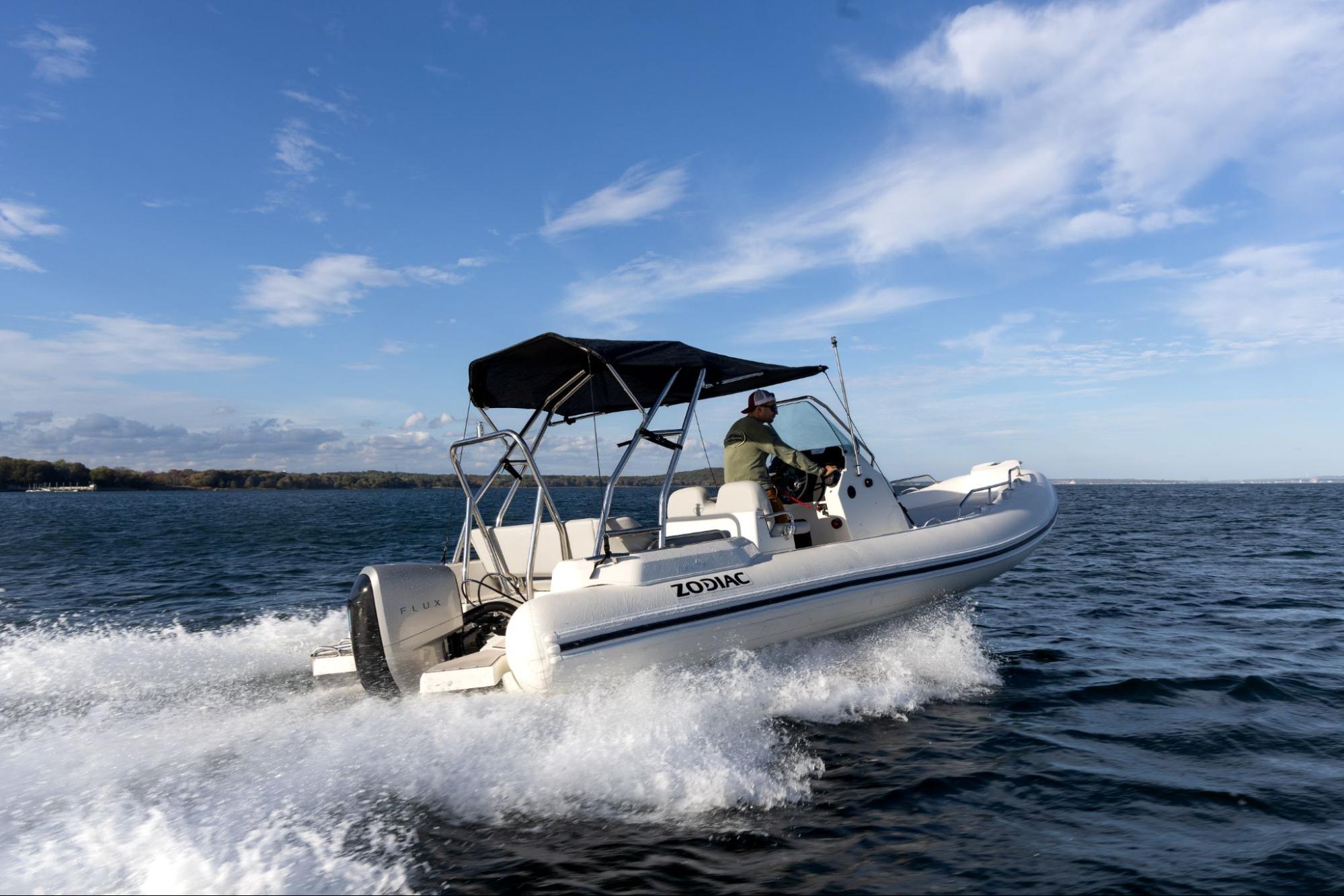
- Outboard motors: Our specialty at Flux Marine. We design and build high-performance electric outboards that are direct replacements for gasoline outboards, simplifying the conversion process for many boats, especially pontoons and center consoles.
- Pod drives: These are compact, submerged units that contain the motor and propeller, offering excellent maneuverability and efficiency by eliminating shaft lines and reducing drag.
Matching the motor's power to your hull size, weight, and intended use case is paramount. A small electric motor might be sufficient for a 14-16' boat used for low-speed cruising, while a larger system is needed for more substantial propulsion. We can help you determine the right power output for your specific vessel and how our Flux Marine electric technology can meet those needs.
Sizing Your Battery Bank for Range and Performance
The battery bank is where the energy for your electric boat is stored, making its selection and sizing critical. We recommend lithium-ion batteries, specifically Lithium Iron Phosphate (LiFePO4 or LFP), for marine applications.
LiFePO4 batteries are preferred due to their excellent safety profile, longer lifespan, and higher energy density compared to traditional lead-acid batteries. While other lithium-ion chemistries are used in automotive applications, LiFePO4 is safer for boat installations.
Sizing your battery bank involves calculating the necessary capacity in kilowatt-hours (kWh). This depends on your motor's power consumption, your desired cruising speed, and the range you need. For instance, a system for a 10m cruising yacht might be designed for five to six hours of cruising at 4 knots.
Voltage considerations are also important. Most modern electric propulsion systems for small to medium yachts use a 48V battery bank. Higher voltage systems allow for lower current draws for a given power output, which can mean lighter and more flexible battery cables.
A robust Battery Management System (BMS) is non-negotiable for safety and longevity. The BMS monitors individual cell voltage and temperature, manages current flow, and balances cells to ensure the battery operates within safe parameters. This is crucial for preventing overcharging, over-discharging, and overheating. When considering an electric boat conversion, understanding battery safety is key, and we address this in our article Is Electric Boating Safe?.
Finally, balancing weight, cost, and range is a delicate act. While more batteries mean more range, they also add weight and cost. We work with our customers to find the optimal balance for their specific boating needs.
Supporting Systems for Your Electric Boat Conversion
Beyond the motor and batteries, several other systems are essential for a complete and functional electric boat conversion.
The motor controller acts as the brain of the propulsion system, regulating power from the battery to the motor. It interprets signals from your throttle control and adjusts motor speed and torque accordingly, managing efficiency and protecting the motor from overload.
Throttle controls for electric systems are typically electronic, providing smooth, precise speed regulation. Many conversions can adapt existing throttle mechanisms to send a signal to the motor's controller.
Charging options are diverse. Shore power is the most common method, allowing you to plug in at the dock. Solar integration is also popular, with panels contributing to range or keeping your house bank topped up.
Regenerative charging, or hydro-regeneration, is another option, particularly for sailboats. When the boat is moving under sail, the spinning propeller can act as a turbine, generating electricity to recharge your batteries. For instance, a boat sailing at 7 knots can generate a substantial amount of power.
Advanced variable-pitch propellers can significantly improve regeneration efficiency. However, we advise customers to consider hydro-regeneration as a supplementary, not primary, charging source when planning their system.
Finally, propeller selection is critical. Electric motors deliver torque differently than internal combustion engines, often favoring larger, slower-turning propellers for maximum efficiency. Optimizing your propeller for electric drive ensures you get the most out of your system. For those interested in the nitty-gritty of a DIY approach, you can Read a detailed DIY conversion story.
Planning Your Electric Boat Conversion Project
Starting an electric boat conversion is a significant project, but with careful planning, it's a rewarding one. Whether you choose a DIY approach or professional installation, understanding the process and costs involved is key.
DIY vs. Professional Installation: Cost and Skill Considerations
The decision between a do-it-yourself (DIY) conversion and hiring professionals largely comes down to your mechanical and electrical expertise, available time, and budget.
A DIY conversion can be more cost-effective upfront, but it demands a specific skillset. You'll need mechanical ability, basic electrical knowledge, and the right tools. A DIY-installed system might cost $20,000–$30,000, depending on the battery capacity, but can require hundreds or even thousands of hours of work.
For those who prefer peace of mind or lack the time and expertise, professional installation is the way to go. Companies like ours in Bristol, RI, West Palm Beach, FL, and Norfolk, VA, offer comprehensive services from system design to commissioning.
A professionally designed and installed system is more likely to be in the region of $35,000–$55,000. While this is a higher initial outlay, it includes expert knowledge, ensures compatibility, often comes with warranties, and provides the assurance that the system is installed safely and efficiently. This is especially important for complex lithium battery systems.
Here's a quick comparison:
FeatureDIY InstallationProfessional InstallationCost$20,000–$30,000 (parts only)$35,000–$55,000 (parts and labor)TimeHundreds to thousands of hours (can be very long)Weeks to months (depending on project scope)Required SkillHigh mechanical and electrical aptitudeMinimal (you hire the expertise)WarrantyTypically limited to individual component warrantiesOften covers the entire system and installationSafetyRelies on DIY knowledge and adherence to standardsEnsured by certified technicians and adherence to marine codes
Key Steps in a Successful Conversion
Regardless of whether you go DIY or professional, the fundamental steps for a successful electric boat conversion remain similar:
- Removing the Old Engine: This is often the first, and sometimes messiest, step. Carefully disconnect all fuel, exhaust, cooling, and electrical lines, then hoist out the old gas or diesel engine.
- Preparing the Engine Bay or Transom: Clean the area thoroughly. For inboard conversions, you might need to modify engine mounts. For outboard conversions, ensure the transom is structurally sound for the new electric outboard.
- Installing the Electric Motor and Drive: Mount the electric motor or outboard. For inboard systems, ensure proper alignment with the propeller shaft. For pod drives, integrate them into the hull.
- Wiring the System: This is a critical step. Install the battery bank, BMS, motor controller, and all associated wiring. Ensure all connections are secure, waterproof, and correctly sized for the electrical load, adhering to ABYC standards.
- Ensuring Component Compatibility: Verify that all components—from the motor and batteries to the throttle and charging system—are compatible in terms of voltage, current, and communication protocols.
- Final System Testing: Before venturing out, thoroughly test the entire system under controlled conditions. Monitor motor and controller temperatures, check battery performance, and ensure all safety mechanisms are functioning correctly. We test our systems rigorously before they ever leave our facilities.
Real-World Performance: Range, Charging, and Practical Challenges
One of the most common concerns we hear from boaters considering an electric boat conversion is "range anxiety." It's a valid point, but modern electric propulsion systems are designed for real-world use, and understanding their capabilities is key.
As mentioned, a typical 10m cruising yacht can achieve 5-6 hours of gentle cruising at 4 knots. This performance profile covers the vast majority of day-to-day boating for recreational users in areas like Rhode Island, Florida, or New Jersey.
Your range will depend heavily on cruising speed—just as with a gas engine, pushing the throttle uses significantly more power. For instance, a small increase in speed can drastically increase power consumption.
Regenerative charging plays a role in extending range, especially for sailboats. While sailing, the propeller can generate power, feeding it back into your battery bank. However, it's generally considered a bonus, not a primary source of charging.
Charging infrastructure is continually expanding. Most marinas in our service areas of Bristol, RI, West Palm Beach, FL, Norfolk, VA, Brookhaven, NY, and Brick, NJ, offer shore power, making overnight charging straightforward. You simply plug in your boat, much like an electric car.
For those seeking more independence, solar panels can be integrated to provide a continuous trickle charge. This can add crucial hours to your range or maintain your house bank.
While the charging process is generally simple, it requires foresight. Planning your trips around available charging points or leveraging solar and regenerative capabilities ensures you always have enough power. The growing number of conversions and new electric boats on the water proves their viability, a topic we explore in our podcast Can Boats Go Electric Too?.
The Evolution and Future of Electric Marine Propulsion
The concept of electric boats isn't new; it's a technology with a rich history. Over a century ago, electric propulsion was a common sight. For example, 55 electric launches ferried attendees around the 1893 World's Columbian Exhibition in Chicago. Electric boats were even supplied to the British Admiralty during WWI, demonstrating the practical application of this technology long before the internal combustion engine dominated the marine landscape.
Today, we're witnessing a resurgence, fueled by significant advancements in battery technology, motor efficiency, and power electronics. Modern electric boat motors are far more powerful, lighter, and more reliable than their historical counterparts. At Flux Marine, we're at the forefront of these advancements, pushing the boundaries of what's possible in marine electric propulsion. You can learn more about these innovations on our page dedicated to Learn about electric propulsion advancements.
The future of electric boat conversion and electric boating is bright. We anticipate continued improvements in:
- Battery Technology: Expect even higher energy densities, faster charging capabilities, and further reductions in weight and cost. This will lead to longer ranges and even more compact battery banks.
- Motor Efficiency: Ongoing research and development will make electric motors even more efficient, squeezing more performance out of every watt-hour.
- Integrated Systems: We'll see more sophisticated, fully integrated propulsion and energy management systems that seamlessly combine motors, batteries, charging, and even onboard appliance power.
- Charging Infrastructure: As adoption grows, charging stations at marinas will become as common and accessible as gas pumps are today.
We're proud to be contributing to this future. For example, our technology powered The World's Fastest Electric Boat Powered by Flux Marine, showcasing the incredible performance potential of electric marine propulsion. This isn't just about leisurely cruising; it's about delivering robust, high-performance solutions for all types of boating.
Conclusion
An electric boat conversion is more than an upgrade; it's an investment in a superior boating experience. The reliability of fewer moving parts, lower operating costs from eliminating fuel and extensive maintenance, and the pleasure of quiet, emission-free cruising are compelling advantages.
For boat owners in areas like Bristol, RI, West Palm Beach, FL, Norfolk, VA, Brookhaven, NY, and Brick, NJ, electric conversion is a practical, accessible option. Whether you own a recreational vessel or operate a commercial workboat, the benefits are clear.
At Flux Marine, we are dedicated to designing and building electric propulsion systems that deliver a more powerful, efficient, and enjoyable boating experience. We make ownership easier while contributing to a cleaner, quieter industry.
We invite you to explore our advanced electric propulsion systems and find how Flux Marine can transform your boating experience. If you're interested in how electric systems can benefit commercial operations, you can Explore electric systems for workboats on our site.
Learn how Flux Marine electric propulsion can transform your boating experience. Request a demo or see how electric compares to gas.

.jpg)