.svg)

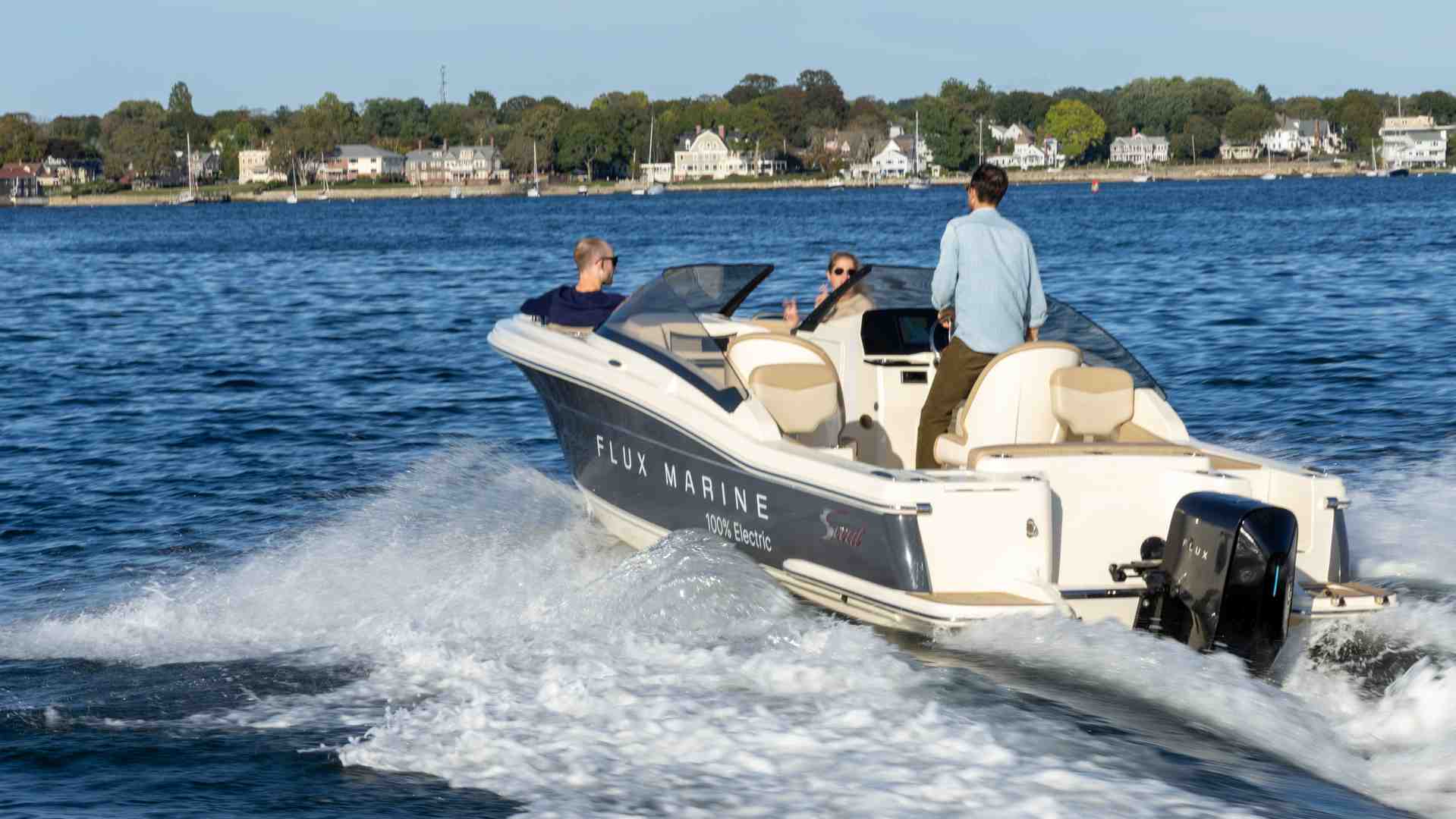
Why Eco Friendly Boating Matters Now More Than Ever
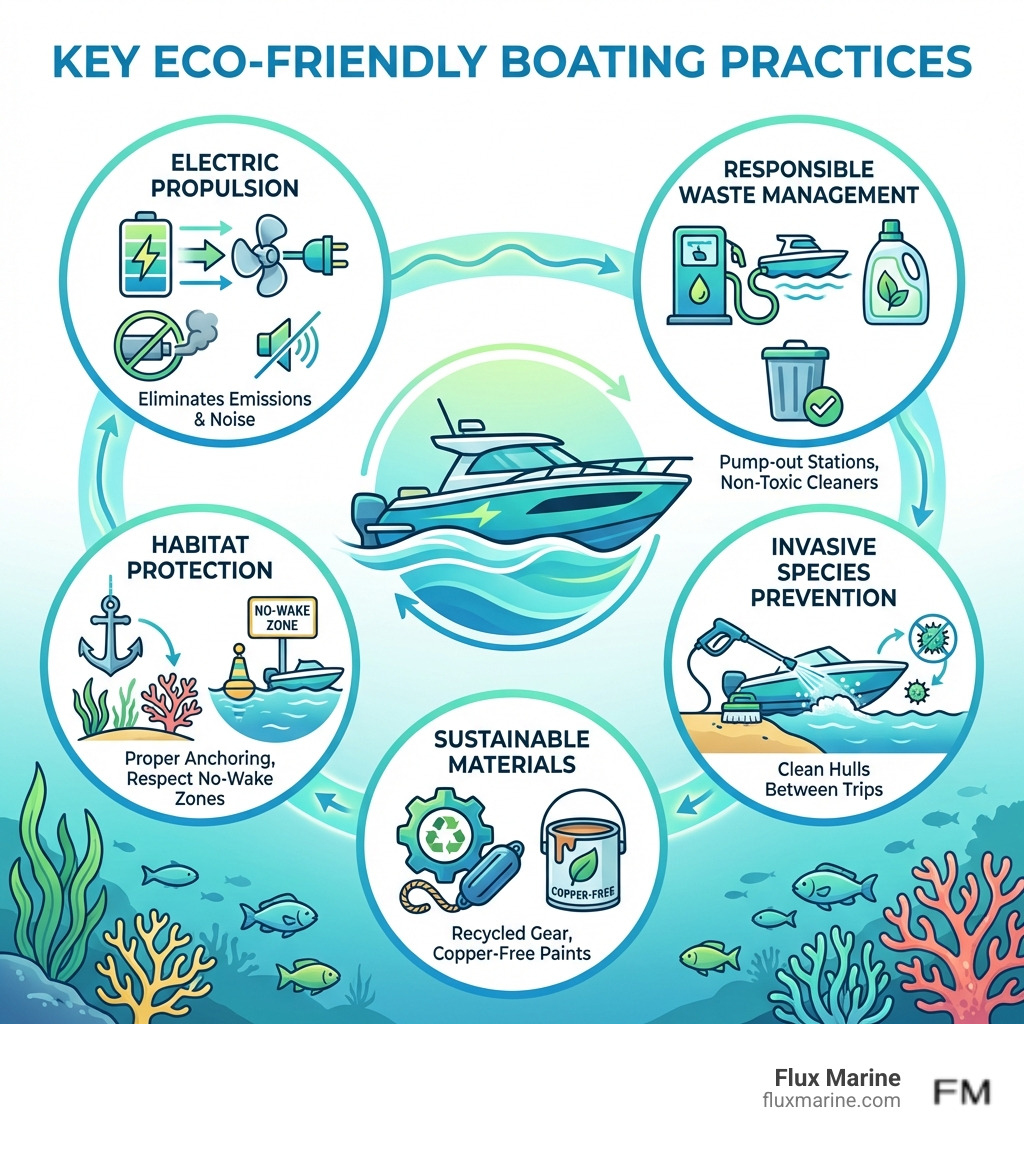
Eco friendly boating reduces pollution, protects marine ecosystems, and improves the on-water experience through cleaner, quieter technology. Here's what it involves:
- Zero-emission propulsion – Electric outboards eliminate exhaust and reduce noise
- Responsible waste management – Proper disposal of fuel, oil, sewage, and trash
- Habitat protection – Anchoring practices and speed limits that preserve seagrass and shorelines
- Invasive species prevention – Cleaning hulls and equipment between trips
- Sustainable materials – Non-toxic cleaners, eco-friendly bottom paints, and recycled gear
The environmental cost of conventional boating is significant. An estimated 30 percent of fuel from two-stroke engines enters the water directly, and just one quart of oil can create a slick covering three football fields. More than 51 trillion microplastic particles now circulate in our oceans, harming marine life and entering the food chain. These issues are avoidable with modern technology and practical habits.
Electric propulsion is the most impactful upgrade a boater can make. It eliminates tailpipe emissions at the point of use, operates quietly enough to preserve natural soundscapes, and requires far less maintenance than gas engines. Paired with responsible onboard practices—spill-proof fueling, proper waste disposal, and habitat-aware navigation—electric boating delivers measurable environmental benefits without compromising performance.
I'm Benjamin Sorkin, founder and CEO of Flux Marine, where I've spent the last decade developing high-performance electric outboards designed for real-world boating. My work in Eco friendly boating technology focuses on delivering power, range, and reliability that meets or exceeds gas engines—without the fuel, fumes, or frequent upkeep.
Understanding Boating’s Environmental Impact
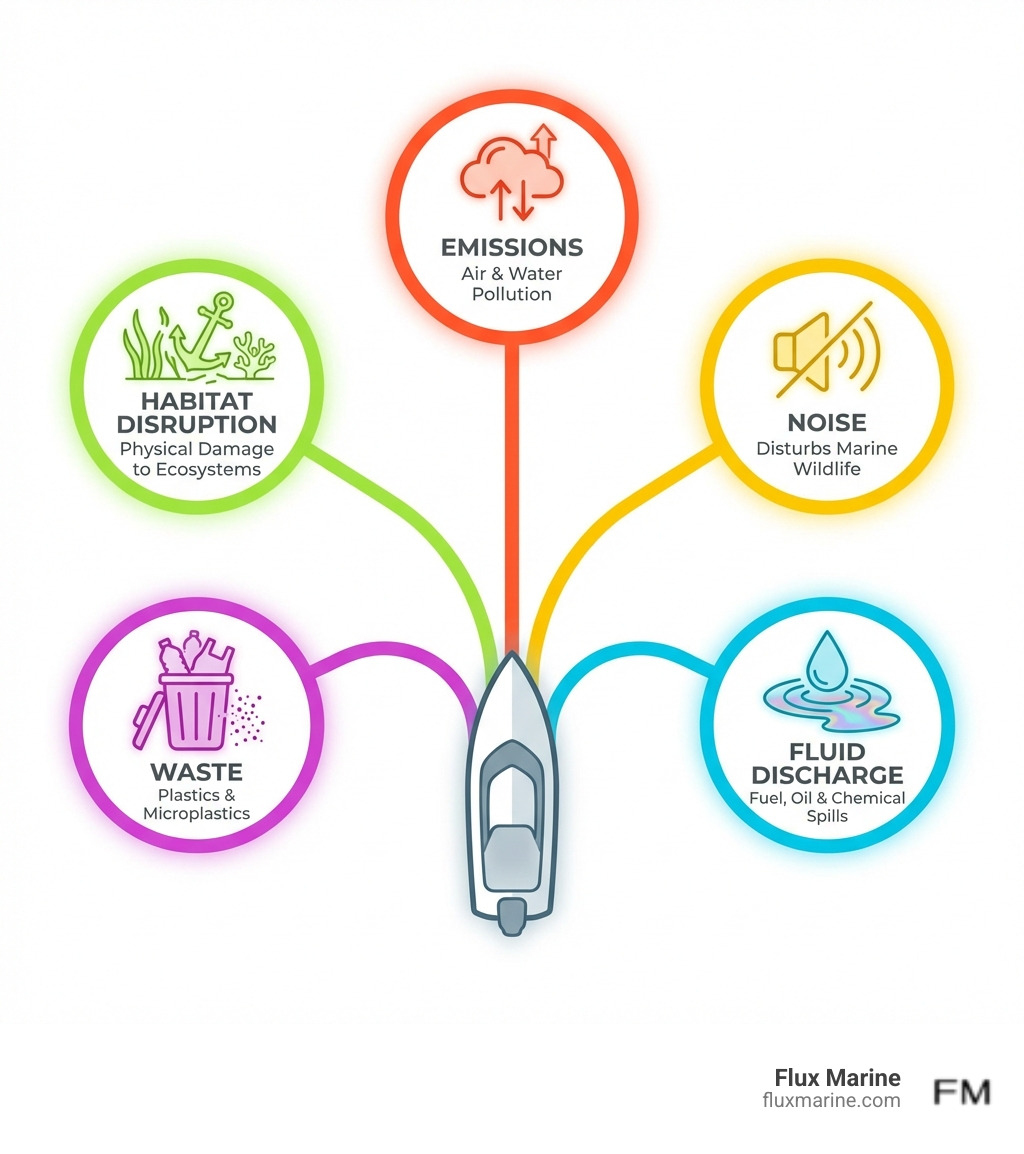
Our love for the water often brings us closer to nature, but it also comes with a responsibility to protect it. Understanding the environmental impact of traditional boating practices is the first step toward adopting a more eco friendly boating approach. Conventional gas engines, for instance, contribute to both air and water pollution. The burning of fossil fuels releases carbon emissions, while accidental spills or inefficient engines directly contaminate waterways.
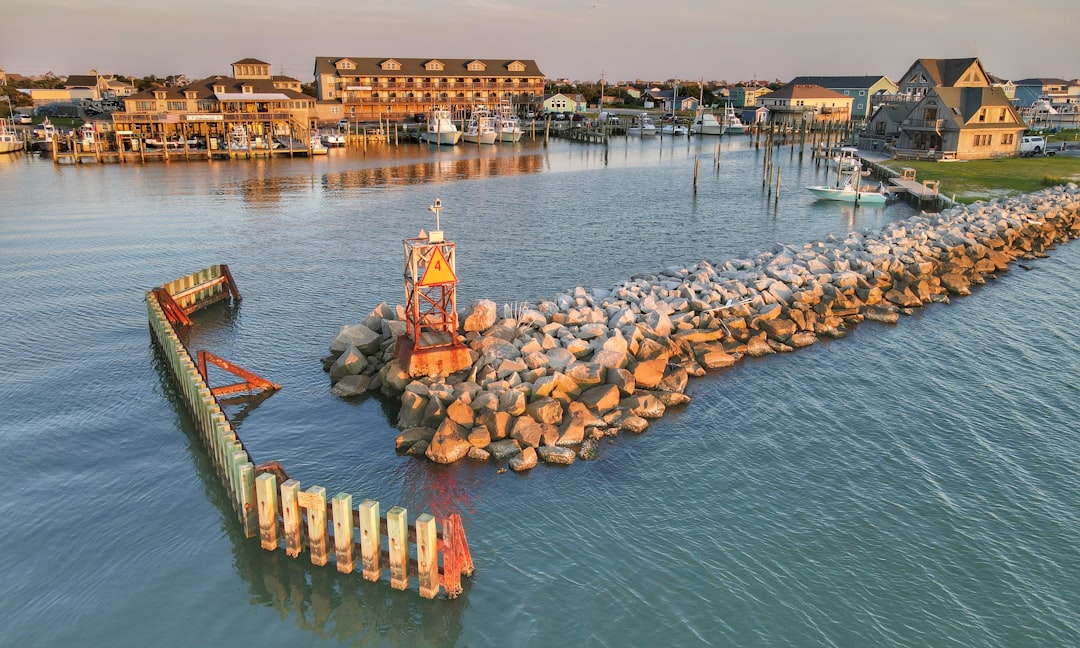
Statistics paint a clear picture of these challenges. The volume of hydrocarbon and oil pollution entering North American waters annually from recreational boating is estimated to be more than 15 times the amount of the Exxon Valdez spill, potentially reaching up to one billion liters per year. A significant portion of this comes from two-stroke engines, where an estimated 30 percent of all fuel and oil ends up directly in the water. Even a small spill can have a huge impact; just one quart of oil can create a slick covering three football fields, persisting for up to two years.
Beyond fuel and oil, the marine environment faces threats from plastic waste and other debris. More than half a million tons of discarded fishing nets and gear pollute our oceans annually. This contributes to the estimated 70 million tons of waste dumped into oceans each year, with plastics constituting 70-80% of that total. These plastics can take up to 300 years to degrade, breaking down into microplastics that now number over 51 trillion particles in our oceans. These tiny fragments pose severe risks up the food chain, leading to tragic outcomes like the estimated 100,000 marine mammals that die each year in the North Pacific from ingesting microplastic or becoming tangled in larger plastic pieces.
Noise pollution from conventional engines can also disturb marine wildlife, impacting breeding patterns and behaviors. Invasive species, often transported unwittingly by boats, disrupt delicate ecosystems. These issues highlight the urgent need for widespread adoption of eco friendly boating practices and technologies to preserve the pristine waters we cherish.
Electric Propulsion: The Core of Eco Friendly Boating
At Flux Marine, we believe that the future of boating is electric. Electric propulsion represents a fundamental shift towards truly eco friendly boating, addressing many of the environmental challenges posed by traditional internal combustion engines. Our electric outboards eliminate tailpipe emissions at the point of use, meaning no more harmful exhaust fumes entering the air or water. This directly combats the hydrocarbon pollution that has plagued our waterways for decades.
The benefits extend beyond just zero emissions. Electric outboards operate with remarkable quietness, preserving the natural soundscape of our marine environments. This reduces disturbance to wildlife and improves the peaceful experience for boaters. Owners also find that electric systems require significantly less maintenance than their gas counterparts, leading to less time in the shop and more time on the water.
Key advantages of choosing electric propulsion for your vessel include:
- Zero exhaust at the point of use: No more harmful emissions polluting our air and water.
- Instant torque for responsive handling: Electric motors deliver immediate power, providing precise control and exhilarating acceleration.
- Lower operating costs over time: With fewer moving parts and no need for gasoline or oil changes, electric outboards can be more economical to run and maintain.
We are committed to delivering a more powerful, efficient, sustainable, and enjoyable boating experience, making ownership easier and contributing to a cleaner, quieter industry.
Learn more about Flux Marine’s electric propulsion technology
Real-World Performance and Reliability
There's a common misconception that electric motors can't match the power and reliability of gas engines. However, modern electric outboards are proving this wrong, matching or even exceeding the performance of traditional systems in many real-world applications. Our electric outboards offer:
- Smooth low-speed maneuvering: The precise control of electric motors makes docking and navigating tight spaces effortless.
- Consistent power delivery: Unlike gas engines that can lag, electric motors provide steady, reliable power throughout their operating range.
- Fewer moving parts for increased reliability: The simpler design of electric outboards translates to less wear and tear, reducing the likelihood of breakdowns and extending operational life.
We understand that boaters prioritize performance and dependability. Our focus at Flux Marine is to engineer electric outboards that not only meet but exceed expectations, ensuring a powerful and reliable experience every time you hit the water. This advanced engineering addresses the practical needs of serious boaters, from recreational enthusiasts to commercial operators.
Understanding torque in electric motors
Furthermore, we often hear questions about the safety of electric boating. We've designed our systems with redundant safety features and rigorous testing to ensure they are not just environmentally friendly, but also exceptionally safe for all onboard.
Efficiency Beyond the Motor: Hull and Navigation
While the electric motor is at the heart of eco friendly boating, optimizing overall vessel efficiency involves more than just propulsion. Advances in hull design and digital navigation tools play a crucial role in reducing energy consumption, whether you're running on electricity or traditional fuel.
Modern hull shapes are engineered to minimize drag, allowing boats to glide through the water with less resistance. This translates directly to reduced energy requirements, extending range for electric boats and improving fuel efficiency for conventional vessels. For instance, hydrofoil technology, which "lifts" hulls above the waterline, can dramatically cut drag, leading to significant reductions in operational costs and CO₂ emissions.
Integrated navigation systems also offer powerful tools for efficiency. Features like:
- Optimized hull shapes for less drag: Designed to reduce resistance and improve hydrodynamic performance.
- Route planning to minimize fuel or battery use: Advanced software suggests the most efficient headings and speeds based on real-time weather and current data. Tools like PredictWind and Navionics now include fuel-optimization modules to help boaters plan their journeys more efficiently.
- Integrated monitoring for efficient operation: Connected-boat platforms integrate GPS, weather, and power-management data, allowing for real-time optimization of speed, route, and generator use.
By combining efficient hull designs with smart navigation, we can collectively push the boundaries of eco friendly boating, making every journey smoother, longer, and more sustainable.
Onboard Best Practices for Cleaner Boating
Beyond the propulsion system, many everyday boating habits can significantly impact our waterways. Adopting simple best practices onboard can make a collective difference in preserving marine ecosystems.
Responsible Maintenance and Fueling
Fuel and oil spills are among the most visible and damaging forms of marine pollution. Even a small amount can harm aquatic life and habitats. As boaters, we can take proactive steps to prevent these incidents:
- Use spill-proof containers and absorbent pads: Always have these on hand during fueling and maintenance. Fill portable fuel tanks on shore, never on board.
- Regularly check engines for leaks or inefficiency: A well-maintained engine is not only more reliable but also less likely to leak oil or fuel.
- Operate at recommended cruising speeds: Excessive speed can lead to higher fuel consumption and increased emissions. Slowing down to the minimum 'on-plane' speed can significantly reduce fuel burn.
- Avoid overfilling fuel tanks: Fuel expands with heat, and overfilling can lead to spills through the vent line. Monitor airflow from the vent to know when the tank is nearly full, and stop filling. Close the vent on portable gas tanks when not in use or stored.
- Properly dispose of used oil and filters: Never mix hazardous wastes or pour them down drains. Use designated facilities for recycling used oil, filters, and solvents. In the U.S., you can call 1-800-CLEANUP for the nearest disposal facility.
These practices, combined with routine maintenance, ensure that our vessels run cleanly and efficiently, minimizing our environmental footprint.
Tips for fuel efficiency from BoatUS
Managing Waste and Contaminants
Waste management is a critical component of eco friendly boating. The mantra "pack it in, pack it out" should apply to all items brought aboard. Reducing the amount of waste generated, especially plastics, is paramount given the severe impact on marine life.
- "Pack it in, pack it out" for all trash: Never discard anything overboard. All waste should be stored securely and disposed of properly on shore.
- Reduce single-use plastics onboard: Opt for reusable bottles, containers, and bags. This helps combat the alarming statistic that 70-80% of ocean waste is plastic, which can take centuries to degrade.
- Use pump-out stations for sewage: Never discharge sewage directly into sensitive waters. Many marinas in our operational areas (RI, FL, VA, NY, NJ) offer pump-out facilities. It is illegal to dump untreated sewage within U.S. territorial limits.
- Choose non-toxic, biodegradable cleaners: Traditional harsh cleansers can introduce harmful chemicals into the water. Products like Star Brite Sea Safe Biodegradable Boat Wash use biodegradable formulas that are safe for both freshwater and saltwater environments and are phosphate-free.
- Consider natural cleaning alternatives: For various surfaces, simple household items work wonders. For stainless steel, use undiluted white vinegar. For aluminum, a solution of cream of tartar and water is effective. Plastic surfaces and decks can be cleaned with a mixture of one part white vinegar and two to eight parts warm water, respectively.
By diligently managing our waste and choosing environmentally sound products, we can significantly reduce the contaminants entering our precious waterways.
A guide to marine waste management
Preventing the Spread of Invasive Species
Invasive species pose a serious threat to native ecosystems, outcompeting local populations and disrupting the natural balance. For instance, species like the zebra mussel have caused significant harm in the Great Lakes, impacting both ecology and infrastructure. Boaters are often unintentional vectors for their spread, transporting microscopic larvae or adult organisms on hulls and equipment.
To prevent the spread of these harmful invaders, we must adhere to strict protocols:
- Follow the “Clean, Drain, Dry” protocol: This is the most effective method. After each trip, especially when moving between different water bodies, thoroughly clean your boat to remove all visible aquatic plants and animals. Drain all water from the bilge, live wells, and motors while on land. Finally, dry the boat and trailer completely before launching into new waters.
- Inspect hull and gear after each trip: Pay close attention to propellers, trailer rollers, anchor lines, and any crevices where organisms might hide. Remove any hitchhiking plants, animals, or mud.
- Dispose of bait and plants properly: Never release unused bait into the water. Dispose of aquatic plants and other debris in designated trash receptacles on shore.
By taking these precautions, we ensure that our enjoyment of the water doesn't come at the cost of its ecological integrity.
Information on invasive species from the NWF
Sustainable Materials and Boat Care
The choices we make regarding boat materials and maintenance products have a lasting impact on the environment. Embracing sustainable options is a key aspect of eco friendly boating.
Eco Friendly Hull Treatments and Cleaning
Traditional antifouling paints often contain heavy metals, like copper, which leach into the water to deter marine growth. While effective, these biocides can harm aquatic wildlife and accumulate in marine environments. Fortunately, less toxic and non-toxic alternatives are now widely available:
- Avoid copper-based antifouling paints: Explore newer formulations that minimize or eliminate copper content.
- Use metal-free or non-biocidal coatings: Innovative products like Smart Solution and Monterey Solvent-Free Bottom Paint offer durable, non-toxic antifouling. Finsulate's nanofiber technology, for example, provides a non-biocidal barrier that prevents fouling without leaching harmful chemicals.
- Clean with household alternatives like vinegar and baking soda: For general cleaning, these natural products are effective and pose no threat to marine life. For fiberglass stains, a paste of baking soda and water works wonders. White vinegar, either undiluted or diluted with warm water, can clean stainless steel, plastic surfaces, and decks. A solution of cream of tartar and water is excellent for aluminum. These natural alternatives are safe for both your boat and the environment.
When hull cleaning is necessary, especially for boats with ablative paints, it's best to haul the boat out at a marina with a 'closed-loop' system where runoff is collected and filtered. This prevents paint residue from entering the water.
Greener Gear and Construction Choices
The lifecycle of our boating gear and even the boats themselves can be made more sustainable. From initial construction to end-of-life disposal, conscious choices can significantly reduce environmental impact.
- Look for boats built with recycled or responsibly sourced materials: Some manufacturers are exploring options like recycled composite waste or sustainably sourced timber, certified by sustainable forestry practices, for new boat construction.
- Choose gear and upholstery made from recycled content: Companies like Sunbrella offer marine upholstery (their Renaissance fabrics) comprised of up to 50 percent "waste" Sunbrella yarns. Similarly, Costa Sunglasses is combating ocean plastic by making frames for its Untangled Collection from recycled fishing nets.
- Maintain and repair equipment to extend its lifespan: Rather than discarding items, repairing or repurposing old boating gear reduces landfill waste. Many items can be upcycled or donated, contributing to a circular economy.
By opting for sustainable materials and extending the life of our equipment, we reduce demand for new resources and minimize waste, making our boating lifestyle truly eco friendly.
Navigating Responsibly to Protect Marine Habitats
Our interactions with the marine environment while underway or at anchor have a direct bearing on its health. Responsible navigation is a cornerstone of eco friendly boating, ensuring we protect sensitive habitats and minimize disturbance to wildlife.
- Anchor in sand or mud, not on sensitive habitats: Corals, seagrass beds, and shellfish beds are vital ecosystems that can be severely damaged by anchors and chains dragging across the bottom. Always aim to anchor in sandy areas, using enough chain to ensure your anchor holds without dragging. Consider using existing mooring buoys whenever possible.
- Respect no-wake zones to prevent shoreline erosion: Operating at idle or 'no-wake' speed within 200 feet of shore, or in designated zones, is crucial. The wakes generated by faster boats can erode shorelines, disturb nesting birds, and damage shallow habitats. Slowing down also helps reduce noise pollution and fuel consumption.Why you should slow down in no-wake zones
- Keep safe distances from wildlife: Observe marine animals from a respectful distance. Avoid pursuing, feeding, or disturbing them. If wildlife appears alongside your boat, maintain your course and speed, allowing them to move freely. Never separate mothers from their young.
- Practice safe, sober boating: Beyond environmental impact, safety is paramount. Boating Under the Influence (BUI) is as dangerous as DUI; boaters with a Blood Alcohol Content (BAC) over 0.10 are 10 times more likely to die in accidents. Always designate a sober skipper and carry essential safety gear.
These practices ensure that our boating adventures remain harmonious with the delicate marine ecosystems around us.
Supporting Conservation and Clean Marinas
The responsibility of eco friendly boating extends beyond individual actions to community involvement and supporting infrastructure that aligns with environmental stewardship. Marinas play a crucial role in providing the facilities and setting the standards for clean boating.
- Choose marinas certified for clean operations: Marinas worldwide offer "Clean Marina" certification, recognizing facilities that adhere to environmental best practices. These often include providing proper recycling for oil, batteries, and plastics, installing pump-out stations, and conducting spill-response drills. The U.S. Clean Marina program, for example, has certified over 350 marinas, collectively diverting thousands of gallons of waste annually. By choosing certified marinas in states like Rhode Island, Florida, Virginia, New York, and New Jersey, we support a network committed to protecting our waters.Clean Marina programs
- Participate in local waterway cleanups: Join organized events like the International Coastal Cleanup or local initiatives to remove debris from shorelines and waterways. Many organizations provide apps like Clean Swell® to help log debris, contributing to citizen science efforts.
- Report pollution or hazards when you see them: If you witness an oil spill, illegal dumping, or other environmental hazards, report it immediately to the appropriate authorities, such as the U.S. Coast Guard's 24-hour National Response Center.
By supporting clean marinas and actively participating in conservation efforts, we contribute to a broader movement dedicated to healthier oceans and waterways for future generations.
The Future of Boating: Cleaner, Quieter, More Enjoyable
The boating industry is undergoing a significant change, driven by a collective commitment to environmental responsibility and technological innovation. We are seeing a clear trend toward lower emissions and higher efficiency, with electric propulsion leading the charge in eco friendly boating. Organizations like the International Maritime Organization (IMO) are mandating change, with a target of 40% reduction in carbon intensity for new vessels by 2030 under its "IMO GHG Strategy."
Electric propulsion offers real-world benefits that go beyond environmental impact, extending to performance, cost, and maintenance. At Flux Marine, we are at the forefront of this evolution, committed to delivering powerful, reliable electric outboards for both recreational and commercial use. Our technology provides boaters with:
- Environmental sustainability: Zero emissions, protecting air and water quality.
- Improved boating experience: Quieter operation, reducing noise pollution and allowing for more serene enjoyment of nature.
- Reduced operational costs: Lower fuel expenses and less frequent maintenance save boat owners money in the long run.
- Superior performance: Instant torque and smooth power delivery ensure that electric doesn't mean compromise.
The future of boating is not just about being greener; it's about being smarter, safer, and more enjoyable for everyone who loves the water.
Explore available electric boat packages
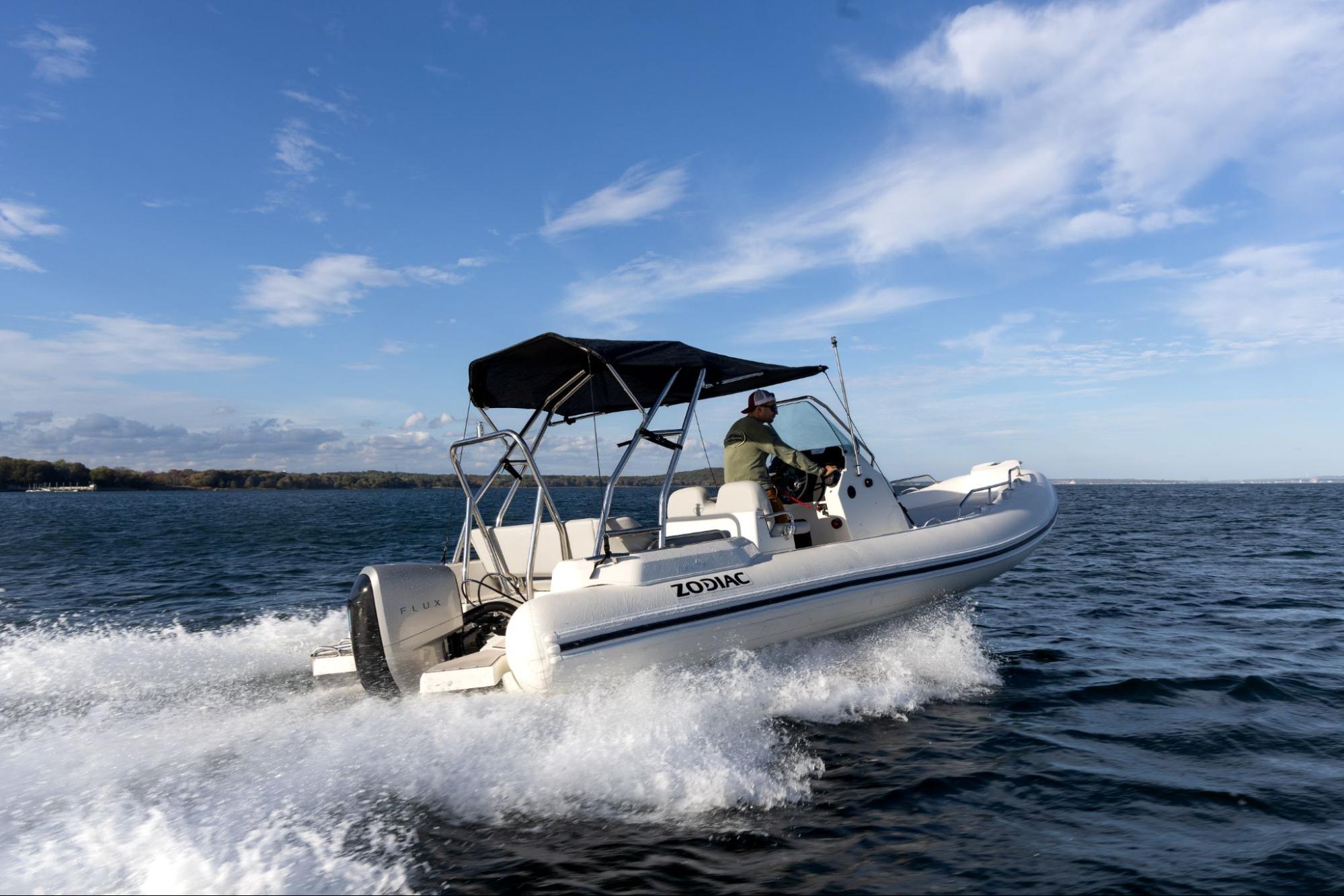
Want to see how electric outboards perform in real conditions? Request a demo or learn more about Flux Marine’s technology.

.jpg)